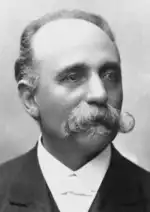
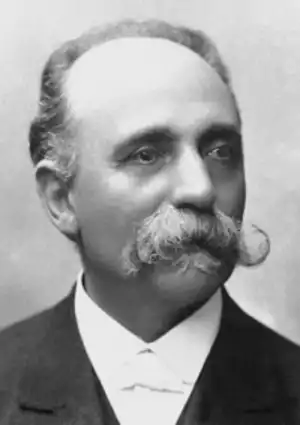
Professor Dr Camillo Golgi (✝︎)
Nobel Prize for Physiology or Medicine 1906
- Location Pavia, Italy
- Election year 1890
Research
Camillo Golgi was an Italian physician and histologist who made a name for himself thanks to his research on neuroanatomy, which proved to be a critical foundation for today’s understanding of the nervous system. The Golgi Reaction, the Golgi Apparatus and the Golgi Cells in the brain are named after him. For his work on the structure of the nervous system, he was honoured with the 1906 Nobel Prize in Physiology or Medicine.
Person
Son of the physician Alexander Golgi and his wife Carolina, Camillo Golgi was born on 7 July 1843 in Corteno in the Province of Brescia, Italy. He married Donna Lina Aletti in 1881, the niece of his teacher Giulio Bizzozero. While the couple had no children of their own, they adopted Golgi’s niece Carolina Golgi-Papini. In his honour, his home village of Corteno was renamed Corteno Golgi.
Camillo Golgi died on 21 January 1926 in Pavia, Italy.
Career
Camillo Golgi studied medicine at the University of Pavia, Italy, where he obtained his doctorate in 1865. Upon completing his studies, he took up work at the city hospital St. Matteo in Pavia. In 1872, he became chief physician at a hospital for chronic diseases in Abbiategrasso in the Lombardy region of Italy, where he started investigating the nervous system in a converted kitchen.
In 1875, Golgi was appointed as Professor of Anatomy at the University of Siena, Italy, and as Professor of Histology at the University of Pavia one year later. In 1878, he became Professor of General Pathology and Histology in Pavia. Golgi also served as Rector of the University of Pavia for several years.
In 1890, he was able to identify three different malaria pathogens and also developed a method for taking photos of these parasites. During the First World War, Golgi advocated for a military hospital in Pavia, where he also established an institute for the research and treatment of injuries of the peripheral nervous system.
Honours and Memberships
Golgi was a member of the German National Academy of Sciences Leopoldina (1890) as well as a foreign member of the Royal Netherlands Academy of Arts and Sciences (1913). In 1900, the Italian King Umberto I. appointed him a member of the senate, one of two parliamentary chambers.
Nobel Prize
Camillo Golgi worked as chief physician at a hospital in the Lombardy region for over 30 years before being awarded the Nobel Prize, where he had improvised a makeshift laboratory in the kitchen. In 1873, he was able to lay the foundations for a scientific revolution, equipped only with an optical microscope and a dissecting set. He had placed a piece of brain tissue in potassium dichromate to harden it. This was an important step because without preparation the brain is very soft and difficult for scientists to handle. Previously, scientists had been able to harden cell tissue using chemical means to slice it finely, which had first enabled them to study brain tissue under a microscope. However, the “creme-like” colour of these preparations made them difficult to discern, which prompted scientists to try dyes from the textile industry.
Following several unsuccessful attempts by other scientists, Golgi achieved a breakthrough: He used silver nitrate. His method, known as the Black Reaction, involved submerging preparations – previously hardened in potassium or ammonium dichromate – in a silver nitrate solution, enabling the controlled staining of specific neuronal elements. Thus treated brain tissue showed branched neurons as dark structures against a light background with great sharpness. Instead of a tangle of confusing, overlapping nerve cells, scientists could suddenly discern individual neurons, a phenomenon that is also referred to as the Golgi Staining Technique.
Thanks to the new opportunities presented by the Black Reaction and the ensuing staining, Golgi was not just able to discover the cell organelles named after him, he also became the first person to observe that the long, tube-like nerve fibres known as axons also have fine, hitherto unknown side branches.
We owe today’s understanding of the human nervous system and its fine structure to Golgi’s work, for which he was honoured with the 1906 Nobel Prize in Physiology or Medicine together with the Spaniard Santiago Ramon y Cajal.