Charles Darwin (✝︎)
- Location Down, United Kingdom
- Election year 1857
Research
Person
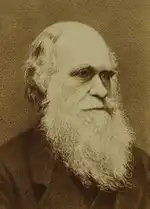
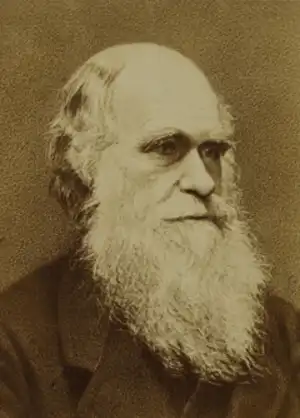
Sir Charles Darwin was born on 12 February 1809, as the fifth of six children of Dr Robert Darwin, and his wife Susannah, née Wedgwood, in Shrewsbury, near Birmingham in the UK.
When Charles was eight years old, his mother died of a gastrointestinal illness, so he was looked after by his three older sisters Marianne, Caroline and Susan. He first attended a day school run by the Unitarian congregation, but in 1818 he transferred to a private boarding school in Shrewsbury, where he remained until 1825. Even as a schoolboy, he was very interested in nature. He also assisted his elder brother Erasmus in chemical experiments.
On 29 January 1839, Sir Charles Darwin married his cousin Emma Wedgwood. The couple were financially independent due to a fortune received from their fathers and had ten children: William Erasmus (1839), Anne (1841), Mary Eleanor (1842), Henrietta (1843), George Howard (1845), Elizabeth (1847), Francis (1848), Leonard (1850), Horace (1851) and Charles Waring (1856).
After returning from his extensive research trip in 1836, Sir Charles Darwin began to experience increased symptoms of illness, from which he never fully recovered. He, therefore, sought peace and quiet, lived in seclusion from then on and never left Great Britain again until his death.
In 1842, the family moved to Down (today: Downe), in the Kent County, south of London, which Darwin hoped would improve his symptoms. He lived in a former vicarage called “Down House” with his family and also wrote his main work there. In addition to his scientific abilities, Darwin was also considered an excellent draughtsman.
Sir Charles Darwin passed away on 19 April 1882 in Down. He was buried in London's Westminster Abbey, not far from Isaac Newton.
Sir Charles Darwin undertook research trips to study flora and fauna and collected material extensively. A species of the rove beetle family that he discovered on one such trip was named Darwinilus sedarisi in 2014. In addition, Darwin's finches are named after him, a group of songbird species that are only found on the Galápagos Islands (and with one species on Cocos Island). Several geographical locations also bear Darwin's name, including Darwin Island in Antarctica, the city of Darwin in Australia and Mount Darwin in Tasmania.
Sir Charles Darwin is still very present in the public consciousness. As a tribute to his contribution to science, his birthday, 12 February, is celebrated annually as Darwin Day, especially at universities worldwide. His portrait was on the back of the British ten pound note from 2000 until 2018. Today, Darwin's home in Downe serves as a museum.
Career
Sir Charles Darwin began studying medicine at the University of Edinburgh in 1825 but dropped out after four semesters. In 1828, at his father's urging, he went to Cambridge to study theology at Christ's College, graduating in 1831. In parallel, he continued to undertake extensive nature studies. His cousin, the entomologist William Darwin Fox, awakened in him a passion for collecting beetles.
Sir Charles Darwin also met distinguished scientists and professors in Cambridge who further strengthened his knowledge and interest in natural sciences. These included the botany professor John Steven Henslow, with whom Darwin later became close friends, and the geologist Adam Sedgwick, with whom he undertook a research trip to Wales in 1831.
It was also Sedgwick who proposed Darwin for the research expedition on the “Beagle”, a British naval vessel. Also, in 1831, Darwin set out on a scientific voyage around the world that lasted until 1836. It took him to the Cape Verde Islands, the Falkland Islands, the coasts of South America, the Galápagos Islands and Australia. Especially his research on the Galápagos Islands, where it was easy to observe how plants and animals adapted to their environment, were the starting point for his later theory of evolution.
After his return, Darwin moved to London in 1837, where he worked intensively to review his expedition. He also met the German naturalist Alexander von Humboldt and the British astronomer John Herschel at that time – one a member of the Leopoldina since 1793, the other in 1857.
In 1838 he was elected Secretary of the Geological Society of England. In the same year, he delved into the book “An Essay on the Principles of Population” by the British economist Robert Malthus. The work inspired Darwin to his theory of natural selection. In the years that followed, he engaged in lively debates with natural scientists such as Charles Lyell, Thomas Henry Huxley and Joseph Dalton Hooker about the evolution of flora and fauna. These debates led to a consolidation of his theory of natural selection.
Between 1838 and 1843, he worked on the five-volume publication “Zoology of the Voyage of H. M. S. Beagle”. He constantly expanded his ideas and theories in the following years. Charles Darwin published his main work in November 1859 under the title “On the Origin of Species by Means of Natural Selection”. It describes, among other things, how different species of finches (Darwin's finches) have adapted to their respective environmental conditions. It is still considered a standard reference work in evolutionary biology.
Sir Charles Darwin’s works were the subject of public debate in the ensuing years. Time and again, he was also criticised for them. The reason being that his teachings not only touched on biological considerations but also on theological and philosophical aspects. The assumption that humankind was not an independent creation, but a product of evolution contradicted and fundamentally refuted the hitherto valid Christian doctrine of creation and other philosophical teachings.
Late in life, Darwin focused on botanical studies and the relationship between animals and plants.
Honours and Memberships
Sir Charles Darwin received numerous awards for his scientific achievements, including the Royal Medal (1853) as well as the Copley Medal (1864) of the Royal Society London (1853), and the Wollaston Medal of the Geological Society London (1859). He became a member of the Royal Society London (1839) and the German Academy of Natural Sciences Leopoldina (1857).