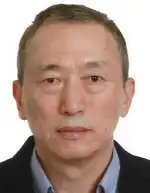
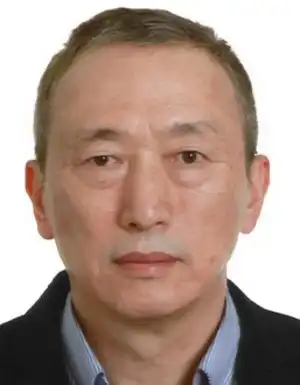
Prof. Dr. Gang Pei
- Section Physiology and Pharmacology/Toxicology
- Location Shanghai, China
- Election year 2020
Research
Research Priorities: Signal transduction, stem cells, neurodegeneration, molecular pharmacology, development of medical drugs
Gang Pei is a Chinese biochemist and cell biologist. His research focuses primarily on signal transduction via G protein-coupled receptors (GPCRs), central sites in cell communication. These receptors play a key role in neurodegenerative and autoimmune diseases. Gang Pei studies how GPCRs impact cell processes and which molecular mechanisms play a role. His objective is to derive novel therapeutic approaches from his work.
Gang Pei’s work focuses on the regulation of the signal pathways of G protein-coupled receptors (GPCRs), proteins on the cell membrane which transmit signals into the cells. In order to achieve a deeper understanding of cell communication, Gang Pei analyses the interaction between GPCRs and other signal cascades, including the transcription factor NF-kB, the cell repair protein p53, and the enzyme gamma secretase. He places particular emphasis on the function of beta-arrestins, proteins which link GPCR signals with other signal pathways and which can even be transported to the cell nucleus in order to influence epigenetic processes there. These findings have fundamentally expanded scientists’ perspective on GPCR signal transduction and revealed new therapeutic target structures.
Gang Pei also conducts research into the biochemical aspects of stem cells, cell programming, and the immortalisation of cell lines. His work has shown that, through the use of small molecules and oxygen deprivation, neural progenitor cells can be generated without necessitating the addition of exogenous genes. He and his team also succeeded in using small molecules to generate human neural cells directly from adult astrocytes, specific glial cells in the central nervous system. In 2015, Gang Pei was able to demonstrate that human fibroblasts can be directly transformed into neural cells, solely through the application of a chemical cocktail made from seven small molecules. This method allows the neural progenitor cell stage to be bypassed in order to directly generate functional nerve cells. These chemically induced neural cells (hciNs) are morphologically, genetically, and electrophysiologically similar to induced pluripotent stem cells (hiPSCs) and conventional induced neurons (hiNs). Gang Pei successfully applied this method to fibroblasts in cases of hereditary Alzheimer’s disease, thereby opening up new pathways for research into neurological conditions and regenerative medicine.
In addition to cellular biology, Gang Pei also pursues the rediscovery of traditional Chinese medicine and the use of natural substances for therapeutic purposes. His team was able to show that, in the animal model, the traditional recipe for “smart soup” significantly reduces the amyloid pathology and cognitive deficits of Alzheimer’s disease. At least one of the medicinal plants used in the recipe has active ingredients which encourage the proliferation of neural progenitor cells. Another plant ingredient reduces the production of β-amyloid and improves cognitive performance. A third plant extract has a positive influence on the morphological dynamics of activated microglia, thus highlighting the synergistic effect of the three medicinal plants. Clinical trials suggest that already authorised Alzheimer’s medication from the category of acetylcholinesterase inhibitors in combination with “smart soup” might provide a therapeutic strategy.
Gang Pei’s innovative approach allows him to pursue the goal of developing new therapy options for neurodegenerative diseases and gaining a more profound understanding of the biology of ageing. By combining modern cellular biology and traditional healing methods, he is discovering novel therapeutic approaches which have the potential to sustainably supplement known courses of treatment.
Gang Pei is a Chinese biochemist and cell biologist. His research focuses primarily on signal transduction via G protein-coupled receptors (GPCRs), central sites in cell communication. These receptors play a key role in neurodegenerative and autoimmune diseases. Gang Pei studies how GPCRs impact cell processes and which molecular mechanisms play a role. His objective is to derive novel therapeutic approaches from his work.
Gang Pei’s work focuses on the regulation of the signal pathways of G protein-coupled receptors (GPCRs), proteins on the cell membrane which transmit signals into the cells. In order to achieve a deeper understanding of cell communication, Gang Pei analyses the interaction between GPCRs and other signal cascades, including the transcription factor NF-kB, the cell repair protein p53, and the enzyme gamma secretase. He places particular emphasis on the function of beta-arrestins, proteins which link GPCR signals with other signal pathways and which can even be transported to the cell nucleus in order to influence epigenetic processes there. These findings have fundamentally expanded scientists’ perspective on GPCR signal transduction and revealed new therapeutic target structures.
Gang Pei also conducts research into the biochemical aspects of stem cells, cell programming, and the immortalisation of cell lines. His work has shown that, through the use of small molecules and oxygen deprivation, neural progenitor cells can be generated without necessitating the addition of exogenous genes. He and his team also succeeded in using small molecules to generate human neural cells directly from adult astrocytes, specific glial cells in the central nervous system. In 2015, Gang Pei was able to demonstrate that human fibroblasts can be directly transformed into neural cells, solely through the application of a chemical cocktail made from seven small molecules. This method allows the neural progenitor cell stage to be bypassed in order to directly generate functional nerve cells. These chemically induced neural cells (hciNs) are morphologically, genetically, and electrophysiologically similar to induced pluripotent stem cells (hiPSCs) and conventional induced neurons (hiNs). Gang Pei successfully applied this method to fibroblasts in cases of hereditary Alzheimer’s disease, thereby opening up new pathways for research into neurological conditions and regenerative medicine.
In addition to cellular biology, Gang Pei also pursues the rediscovery of traditional Chinese medicine and the use of natural substances for therapeutic purposes. His team was able to show that, in the animal model, the traditional recipe for “smart soup” significantly reduces the amyloid pathology and cognitive deficits of Alzheimer’s disease. At least one of the medicinal plants used in the recipe has active ingredients which encourage the proliferation of neural progenitor cells. Another plant ingredient reduces the production of β-amyloid and improves cognitive performance. A third plant extract has a positive influence on the morphological dynamics of activated microglia, thus highlighting the synergistic effect of the three medicinal plants. Clinical trials suggest that already authorised Alzheimer’s medication from the category of acetylcholinesterase inhibitors in combination with “smart soup” might provide a therapeutic strategy.
Gang Pei’s innovative approach allows him to pursue the goal of developing new therapy options for neurodegenerative diseases and gaining a more profound understanding of the biology of ageing. By combining modern cellular biology and traditional healing methods, he is discovering novel therapeutic approaches which have the potential to sustainably supplement known courses of treatment.
Career
- since 2006 Professor, School of Life Sciences and Technology, Tongji University, Shanghai, China
- 2000-2007 Director, Shanghai Institutes for Biological Sciences (SIBS), Chinese Academy of Sciences (CAS), Shanghai, China
- 1992-1995 Postdoctoral Fellow, Howard Hughes Medical Institute (HHMI), Duke University Medical Center, Duke University, Durham, USA
- 1991 PhD in Biochemistry and Biophysics, University of North Carolina (UNC), Chapel Hill, USA
- 1987-1991 Doctoral Researcher in Biochemistry and Biophysics, UNC, Chapel Hill, USA
- 1987 Guest Fellow, Karolinska Institutet, Stockholm, Sweden
- 1982-1984 Master in Pharmaceutical Sciences, Shenyang Pharmaceutical University, Shenyang, China
- 1977-1982 Bachelor in Pharmacy, Shenyang Pharmaceutical University, Shenyang, China
Functions
- since 2015 Honorary President, Chinese Society for Cell Biology (CSCB), China
- 2007-2016 President, Tongji University, Shanghai, China
- 2003-2015 President, CSCB, China
- 2003-2008 President, Asian-Pacific Organization for Cell Biology (APOCB)
- since 2000 Vice-Chairperson, Consortium for Globalization of Chinese Medicine (CGCM)
Projects
- 2010-2015 Coordinator, Scientific Committee, Research Project “Stem Cell Research and Translational Medicine”, Key Technologies Research and Development Program, China
- 2006-2015 Coordinator, Scientific Committee, Research Project “Developmental Biology and Reproduction Biology”, Key Technologies Research and Development Program, China
- 2005-2021 Editor-in-Chief, Cell Research
Honours and Memberships
- since 2020 Member, German National Academy of Sciences Leopoldina, Germany
- 2016 Honorary Doctorate, Aalto University, Espoo, Finland
- 2015 Honorary Doctorate, Hong Kong Polytechnic University (PolyU), Hong Kong, China
- 2014 Commander, Order of the Lion of Finland, Finland
- 2007 National Award for Science and Technology Progress, 2nd Class, China
- 2002 National Award for Science and Technology Progress, 2nd Class, China
- since 2002 Member, World Academy of Sciences (TWAS)
- since 1999 Member, CAS, China