Professor Dr Günter Blobel (✝︎)
Nobel Prize for Physiology or Medicine 1999
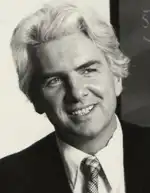
- Section Genetics/Molecular Biology and Cell Biology
- Location New York, NY, United States
- Election year 1983
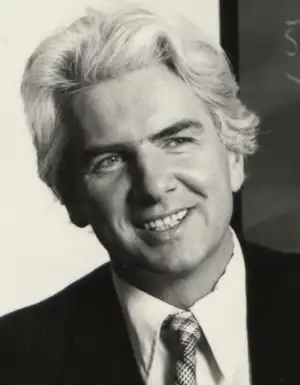
Research
Günter Blobel was a German-American cell biologist. He attained international fame for his discoveries on cell functions, most notably the mechanisms that sort proteins and direct them to their proper locations within the cells. In 1999, Günter Blobel received the Nobel Prize in Physiology or Medicine for discovering that proteins have intrinsic signals which control their transport and localisation within the cell.
Person
Günter Blobel was born as the fifth child of a vet in Waltersdorf in Silesia on 21 May 1936. His family fled their homeland from the approaching Red Army in January 1945. His older sister Ruth was killed in a refugee train shortly before the end of the war. His family found refuge near Dresden, where they witnessed the bombing attack that destroyed most of the city on 13 February 1945. Blobel later said that this event impacted him for the rest of his life.
The family later settled in Freiberg in Saxony, where Günter Blobel graduated from the local secondary school Geschwister-Scholl-Oberschule in 1954. Because of his bourgeois background, he was not permitted to attend university in East Germany, which prompted the family to move to Hamburg before the wall was built.
During his research stay at the Rockefeller University in New York, Blobel met his future wife, Laura Maioglio, an art historian and restaurant owner.
In 1987, Blobel attained American citizenship, but continued to feel connected to Germany.
For many years, Günter Blobel was involved in projects for the reconstruction of historic monuments in Dresden and Leipzig that had been destroyed during the war or during the time of the GDR. In 1994, he founded “Friends of Dresden”, donating the prize money from the Nobel Prize in Medicine or Physiology 1999 for the reconstruction of Dresden’s Frauenkirche (1.6 million DM), as well as the construction of the New Synagogue (100,000 DM) and the reconstruction of the historic Neumarkt in Dresden (50,000 DM) in 2000.
Between 2001 and 2008, as chairman of the Paulinerverein Leipzig, Günter Blobel committed himself to the reconstruction of the Paulinerkirche (also known as University Church of St. Paul), which had been destroyed in 1968. The newly-constructed church, built on the original cubage and with historical elements, was dedicated in 2015, and today also serves as an assembly hall for the University.
Günter Blobel died on 18 February 2018 in New York City.
Career
From 1954, Günter Blobel studied medicine at the Universities of Frankfurt, Kiel, Munich and ultimately Tübingen, where he received his M.D in 1960. In 1967, he earned his PhD in oncology from the University of Wisconsin–Madison, USA.
In 1976 he joined the New York Rockefeller Institute as a postdoctoral researcher. In 1986, he also became an investigator at the Howard Hughes Medical Institute of the Rockefeller University in New York City. A year later, he attained U.S. citizenship and from 1992, he was appointed John D. Rockefeller Jr. Professor at the Rockefeller University in New York.
In the early 1970s, Günter Blobel discovered that newly synthesized proteins have intrinsic signal peptides. He was able to determine that these signal peptides are made of several amino acids in a certain sequence, controlling the transport of proteins from their place of origin in the cytosol to the endoplasmic reticulum (ER), much like an “address tag”. In the endoplasmic reticulum, they are either installed in or transported through the membrane of the ER.
In the twenty years following this discovery, Blobel investigated the molecular mechanisms of these processes in detail and discovered that signal peptides also direct proteins to the remaining organelles in the cell.
The principles described by Blobel have been proven to be universally valid. Several hereditary diseases in humans are caused by disturbed or dysfunctional signals and transport mechanisms. Blobel’s contributions helped make cells more effective in the production of proteins as medicine.
Günter Blobel later directed his attention towards the transport of proteins into the nucleus, with a particular focus on the structure and function of the nuclear pore complex at an atomic level.
Honours and Memberships
Günter Blobel received numerous awards for his scientific work, such as the NAS Award in Molecular Biology from the National Academy of Sciences USA (1978), the Gairdner Foundation Award (1982), the membership in the National Academy of Sciences, the Richard Lounsberry Award, the Otto Warburg Medal (all in 1983), the membership in the American Academy of Arts and Sciences USA (1984), the Louisa Gross Horwitz Prize for Biology or Biochemistry (1987), the membership in the American Philosophical Society USA (1989), the Max Plank Research Award, the Max Delbrück Medal (both in 1992), the Albert Lasker Basic Medical Research Award (1993), the King Faisal International Prize in Science (1996), the Nobel Prize in Physiology or Medicine, the Massry Prize of the Meira and Shaul G. Massry Foundation (both in 1999), the Knights Commander of the Order of Merit of the Federal Republic of Germany, the honorary citizenship of the city of Freiberg (both in 2000), the membership of the Pontifical Academy of Sciences, the Order Pour le Mérite for Sciences and the Arts, as well as the Honorary Doctorate of the Freiberg University of Mining and Technology (all in 2001), the Honorary Doctorate for philosophy at the Goethe University Frankfurt (2002), the membership of the Russian Academy of Sciences (2008) as well as the Honorary Doctorate at the Rockefeller University (2013).
Nobel Prize
In 1971, Günter Blobel and the Argentine-American cell biologist David Sabatini introduced their signal hypothesis, a theory on the sorting of proteins within a cell. According to this theory, amino acid sequences in proteins serve as signals, governing the proteins to their correct destination within the cell.
Blobel and Sabatini did not include experimental evidence to confirm their hypothesis, so it was initially dismissed by the scientific community. This did not discourage Blobel, though, and he spent the subsequent years in search of experimental evidence, until he made a breakthrough at the Rockefeller Institute in 1974. Using cell extracts of a dog’s pancreas, he succeeded in tracing the process of protein synthesis and the membrane transport in vitro, thus confirming the signal hypothesis. However, in spite of the presented experimental evidence, it was not until the 1980s that Blobel’s work on this topic was recognized by the scientific community.
During this period, he dedicated himself to solving the next fundamental question of how a protein is able to pass through a membrane into the interior of an organelle. This enabled him to confirm the existence of protein-conducting channels, whose transport capacity is much larger than the membrane channels identified up to that point.
Blobel’s discoveries had a fundamental impact, paving the way for molecular cell biology. Günter Blobel received the Nobel Prize in Physiology or Medicine 1999 for his work on intracellular protein traffic.