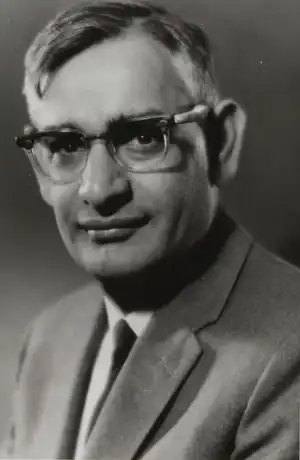
Professor Dr H. Gobind Khorana (✝︎)
Nobel Prize for Physiology or Medicine 1968
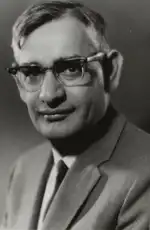
- Section Biochemistry and Biophysics
- Location Cambridge, MA, United States
- Election year 1968
Research
Har Gobind Khorana was an Indian-American chemist. He was awarded the shared Nobel Prize in Physiology or Medicine in 1968 together with the Americans Robert William Holley and Marshall Warren Nirenberg for the interpretation of the genetic code and its function in protein synthesis.
Person
As the youngest of five children in a Hindu family, Har Gobind Khorana was born in the Indian village of Raipur, Punjab (now Pakistan), on 9 January 1922. His father was an employee of the British colonial government. Although the family was very poor, the father insisted that his children receive an education. The family was the only one in the village who knew how to read and write. In his early years, Khorana was taught under a tree by the village teacher.
In 1952 he married the Swiss Esther Elizabeth Sibler. The couple had three children, Julia Elizabeth (1953), Emily Anne (1954) and Dave Roy (1958).
In 1966, Har Gobind Khorana became an American citizen.
In 2007, the University of Wisconsin (UW), the Government of India (GOI) and the Indo-US Science and Technology Forum (IUSSTF) jointly established the Khorana Program, which aims to develop closer ties between scientists, entrepreneurs and social actors in the United States and India.
Har Gobind Khorana passed away on 9 November 2011 in Concord, Massachusetts.
Career
Har Gobind Khorana studied chemistry at the University of the Punjab in Lahore, Pakistan (formerly India). This education was made possible by a scholarship granted to him, even though he was too excited to attend the entry interview. In 1945, he received another scholarship, which he used to write his doctoral thesis at the University of Liverpool, UK. Subsequently, he worked at the Eidgenössische Technische Hochschule in Zurich until 1949 and then went to Cambridge. There he concentrated his work primarily on the research of nucleic acids and proteins.
In 1952, he joined the University of British Columbia in Vancouver, Canada, where he continued to work on nucleic acids. After moving to the United States in 1960, he worked at the University of Wisconsin in Madison. There, he became director of the Institute for Enzyme Research. In 1970, he received a professorship in biology and chemistry at the Massachusetts Institute of Technology (MIT) in Boston. After his retirement in 2007, Khorana accepted a teaching position at Cornell University in New York.
Honours and Memberships
Har Gobind Khorana was honoured with numerous other awards for his work, including the Dannie-Heineman-Preis of the Göttingen Academy of Sciences and Humanities (1967), Louisa Gross Horwitz Prize, Lasker Foundation Award for Basic Medical Research (all 1968), Willard Gibbs Award of the Chicago Section of the American Chemical Society (1974), Gairdner Foundation Annual Award (1980), MIT School of Science Distinguished Service Award (2000), Centennial Honorary Degree of the Rockefeller University New York (2001) and the Indian Padma Vibhushan Award.
In addition, Har Gobind Khorana was a member of various scientific academies, including the US-National Academy of Sciences (NAS), Washington (1966), American Academy of Arts and Sciences, Cambridge (1967), German Academy of Natural Sciences Leopoldina (1968), Foreign Member of the U.S.S.R. Academy of Sciences (AHCCCP), Moscow (1978), Member of the Pontifical Academy of Sciences (PAS), Vatican City (1978), Foreign Member of the Royal Society, London (1978), Foreign Member of the Royal Society of Edinburgh (RSE), (1982).
Nobel Prize
Har Gobind Khorana, Robert William Holley and Marshall Warren Nirenberg received the shared Nobel Prize for their work deciphering and interpreting the genetic code, especially the function of protein biosynthesis.
Har Gobind Khorana was the first scientist to succeed in artificially synthesising a gene in 1970. He thus provided an essential basis for deciphering the genetic code. The starting point of Khorana's research was the so-called Poly-U-Experiment, which Marshall Warren Nirenberg and Heinrich Matthaei had previously carried out.
With his work, Har Gobind Khorana contributed to the foundation of modern genetics. In its justification for awarding the Nobel Prize to him and the two other laureates, the Nobel Committee stated that one could now begin to determine the causes of diseases in which heredity was a factor.