Prof. Dr. Hans Fischer (✝︎)
Nobel Prize for Chemistry 1930
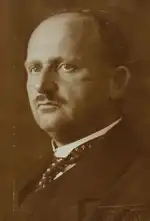
- Section Chemistry
- Location München, Germany
- Election year 1919
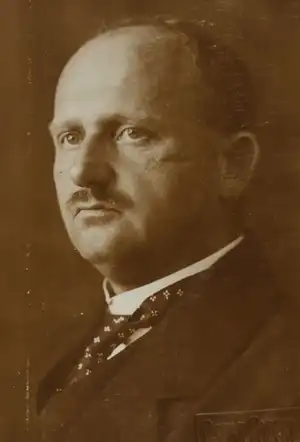
Research
Hans Fischer was a German chemist who received the Nobel Prize in Chemistry for his studies on the structure of blood and plant pigments as well as on the synthesis of haemin in 1930.
Person
Hans Fischer was born on 27 July 1881 to the chemist and company director Dr Eugen Fischer and his wife Anna, neé Herdegen, in Höchst (now a district of Frankfurt am Main). His father was a private lecturer at the Hochschule für Technik (HFT) Stuttgart, Germany, as well as the head of the Chemische Fabrik Kalle, part of the Hoechst group, in Biebrich.
Hans Fischer attended primary school in Stuttgart and secondary school in Wiesbaden, Germany, from which he graduated in 1899. In 1935, he married Wiltrud Haufe.
Hans Fischer died on 31 March 1945 in Munich.
Career
From 1899, Hans Fischer studied in Lausanne, Switzerland, and later in Marburg, Germany. During his first term break, he essentially worked at his father’s plant in Biebrich, Germany. In the course of his work, he discovered that the percentage of hydrochloric acid stated on standard containers was wrong, enabling him to prove a fraud committed by the supplying company, which had to pay a massive financial penalty as a consequence.
On 22 October 1904, Fischer earned his doctorate in chemistry at the Philipps University of Marburg. Fischer went on to read medicine in Munich, and he also earned a doctorate in this subject on 13 March 1908. From 1908 to 1915, he worked at the Department of Internal Medicine II in Munich, Germany. Between 1910 and 1911, he researched under the chemist Emil Fischer in Berlin, Germany, and eventually completed his Habilitation on the subject of internal medicine. After working at the Physiological Institute in Munich for two years, he was appointed Associate Professor of the Faculty of Medicine at the Ludwig Maximilian University of Munich. In 1916, he moved to Innsbruck, Austria, where he became professor for medical chemistry. Three years later, he moved to Vienna, Austria, where he also served as professor. In 1921, he returned to Munich, where he took over the chair for organic chemistry at the local technical university while also serving as director of the Institute of Organic Chemistry.
Towards the end of the Second World War, his institute in Munich was completely destroyed. The loss of his findings caused Fischer to sink into depression, which eventually led to his suicide.
Honours and Memberships
Fischer received several other awards, such as the Liebig Medal of the German Chemical Society (1929) or the Davy Medal (1937). In 1925, Fischer was appointed a Privy Councillor.
Furthermore, Fischer was a member of the German National Academy of Sciences Leopoldina (from 1919) as well as a Corresponding Member of the Royal Prussian Academy of Sciences (from 1941). In 1936, he received an Honorary Doctorate from Harvard University.
Nobel Prize
In his 30 years of research, Hans Fischer was able to completely unveil the molecular structure of the pigments of bile (bilirubin), blood (haemin) and leaves (chlorophyll), the molecular formula of each are almost identical, and prove these findings through synthesis.
These physiologically interesting pigments feature four pyrroles that are connected to each other. In chlorophyll and haemin they form a ring, in bilirubin they are arranged as a chain. Bilirubin is produced in the body from haemin, when its the ring – the porphyrin ring – is burst open, as Hans Fischer was able to prove through synthesis. Haemin is responsible for haemoglobin’s red colour. The synthetical haemin produced by Hans Fischer in 1929 is completely identical with natural haemin occurring in blood.
At the natural science convention in Königsberg (then Germany, now Russia) in 1930, Fischer already spoke about the synthesis of haemin as well as the conversion of blood pigments in the liver into bile pigments. Fischer also described so-called porphyrins, iron-free decomposition products of the blood pigment back then. Some of these porphyrins make the body overly sensitive to sunlight, with normal sun exposure causing severe skin lesions.
Fischer was awarded the Nobel Prize in Chemistry for his research in 1930.