Hans Spemann (✝︎)
Nobel Prize for Physiology or Medicine 1935
- Location Freiburg (Br.), Germany
- Election year 1906
Research
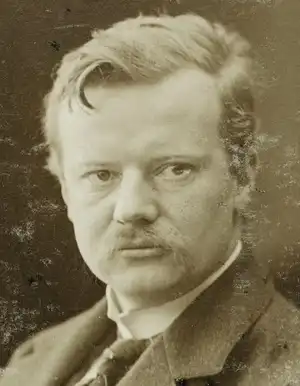
Hans Spemann was a German zoologist and physician, and one of the founders of experimental embryology. An embryonic signal centre, the Spemann-Mangold organiser, was named after him. In 1935, he was honoured with the Nobel Prize in Physiology or Medicine for the discovery of the organiser effect in the embryonic stage of prenatal development.
Person
Hans Spemann was born in Stuttgart on 27 June 1869 as the eldest son of the publisher Johann Wilhelm Spemann and his wife Lisinka Hoffman. From 1878 to 1888, he attended the local Eberhard-Ludwig School. After his graduation, he worked at his father’s company for one year. He was supposed to take over his father’s business one day, but turned towards the natural sciences instead. In 1895, Hans Spemann married Clara Binder. The couple had three sons and one daughter.
Hans Spemann died on 9 September 1941 in Freiburg.
Career
From 1891, Hans Spemann studied medicine at Heidelberg University. After one semester in Munich, he transferred to the University of Würzburg in 1894. In addition to zoology, he also studied physics and eventually obtained his doctorate in 1898. Meeting the physicist Wilhelm Conrad Röntgen, one of his physics teachers, had a significant impact on him.
In 1906, he accepted an offer to become professor in zoology and comparative anatomy at the University of Rostock. In 1914, he joined the Kaiser Wilhelm Institute of Biology at Berlin-Dahlem, where he served as associate director. In 1919, he was appointed professor for zoology at the University of Freiburg, a position he held until his retirement in 1935. From 1923 to 1924, Spemann also served as rector of the University of Freiburg.
Honours and Memberships
Hans Spemann received several awards for his work, among them the Cothenius Medal of the Leopoldina (1935). He was a member of numerous academies and scientific associations, such as the German National Academy of Sciences Leopoldina (1906), the Heidelberg Academy of Sciences and Humanities (1921), the Royal Prussian Academy of Sciences (1929) as well as the American Academy of Arts and Sciences (1933).
Nobel Prize
Spemann already started researching embryology during his time in Würzburg. In order to establish how the development of a living organism is coordinated or organised, he started conducting simple experiments in 1902. One of them consisted of using his baby son’s hair to slice salamanders’ eggs into two halves. The result were artificial twins – proving that each of the halves developed into their own complete embryo. This also revealed that each cell retains the complete genetic material and that cells differentiate depending on their use.
Spemann went on to investigate the development of the eyes in frog embryos. His studies in this field contributed to understanding birth defects. Together with Hilde Mangold, one of his doctoral students, he discovered the so-called Spemann-Mangold organiser in 1922. For the experiment which led to its discovery, Mangold transplanted the tissue of one newt embryo to another. The newts were of different colour, making the development of the transplanted tissue in the target embryo clearly observable. The tissue was taken from one part of the body and transplanted to a different part of the target embryo’s body. The goal of the experiment was to observe how the transplanted cells would react.
Spemann and Mangold came to the conclusion that the cells adapt to their new surroundings if they are transplanted during an early stage of development. They inferred that these cells receive information about their location and what they should develop into from adjacent cells. Spemann and Mangold thus discovered that the formation of an embryo is controlled by a certain cluster of cells, which then “organises” the development of all the other cells. The organiser effect ensures that the embryonic cells “know” where they belong on the mature animal’s body.
In 1924, Hans Spemann and Hilde Mangold jointly published their discovery. Hilde Mangold died in an accident in December of the same year. Hans Spemann was awarded the Nobel Prize in Physiology for the discovery of the organiser effect in 1935. His experiments provided the foundation for understanding embryonic development. However, the bestowal of the Nobel Prize to Spemann caused public astonishment, as the honour thus went to a German scientist only two years after Adolf Hitler had become Reich Chancellor.
Spemann and Mangold’s research sparked controversial discussions, as Spemann suggested not only transplanting tissue, but also nuclei, from one cell to another, earning him the name “father of cloning”.