Professor Dr Ian Thomas Baldwin
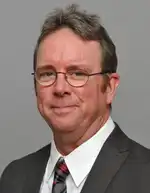
- Section Organismic and Evolutionary Biology
- Location Jena, Germany
- Election year 2013

Research
Research Priorities: Ecology, nature observation, molecular genetics, environmental and agricultural research, pest infestation, predators, herbivores
Ian Thomas Baldwin is a US American ecologist. His particular scientific achievement is connecting nature observation and molecular genetics. In this new research approach, he combines ecology, the studies of organisms and their survival in a specific environment, and the identification and study of individual gene functions. His work results form the basis for modern environmental and agricultural research.
In his research approach, Ian Baldwin combines field experiments with molecular biology, thus bringing together the research branch of molecular and cell biology with that of ecology and evolutionary biology. Against this background, he formulates hypotheses on how and why plants in nature survive despite pest infestation. He wants to find out which genetic characteristics play a role here. Furthermore, he investigates how chemicals control the interaction between living organisms and their environment. In his studies, he focuses on the interaction between plants and their predators (herbivores).
Baldwin has developed a molecular and analytical “toolbox”, which his team use in a natural habitat in the Great Basin Desert in the USA for studying a wild tobacco species as well as genetically modified plants with the aim of discovering the plants’ natural resistance to pests. This extensive programme allowed the scientists to discover genetic and biochemical mechanisms that make the plants resistant to predators. They also uncovered the ideal conditions for the formation of seeds.
Ian Thomas Balwin advocates the idea of promoting a “feeling for the organism” when training biologists and supports initiatives for open access to scientific publications. He is Senior Editor of the open-access journal “eLife”. From 2015 to 2019, he was a Highly Cited Researcher (HCR).
Ian Thomas Baldwin is a US American ecologist. His particular scientific achievement is connecting nature observation and molecular genetics. In this new research approach, he combines ecology, the studies of organisms and their survival in a specific environment, and the identification and study of individual gene functions. His work results form the basis for modern environmental and agricultural research.
In his research approach, Ian Baldwin combines field experiments with molecular biology, thus bringing together the research branch of molecular and cell biology with that of ecology and evolutionary biology. Against this background, he formulates hypotheses on how and why plants in nature survive despite pest infestation. He wants to find out which genetic characteristics play a role here. Furthermore, he investigates how chemicals control the interaction between living organisms and their environment. In his studies, he focuses on the interaction between plants and their predators (herbivores).
Baldwin has developed a molecular and analytical “toolbox”, which his team use in a natural habitat in the Great Basin Desert in the USA for studying a wild tobacco species as well as genetically modified plants with the aim of discovering the plants’ natural resistance to pests. This extensive programme allowed the scientists to discover genetic and biochemical mechanisms that make the plants resistant to predators. They also uncovered the ideal conditions for the formation of seeds.
Ian Thomas Balwin advocates the idea of promoting a “feeling for the organism” when training biologists and supports initiatives for open access to scientific publications. He is Senior Editor of the open-access journal “eLife”. From 2015 to 2019, he was a Highly Cited Researcher (HCR).
Career
- since 2020 Scientific Member, Max Planck Society, Munich, Germany
- 2002 Founder, International Max Planck Research School, Max Planck Institute for Chemical Ecology, Jena, Germany
- since 1999 Adjunct Professor, Friedrich Schiller University, Jena, Germany
- 1996 - 2020 Director, Department of Molecular Ecology, Max Planck Institute for Chemical Ecology, Jena, Germany
- 1996 Founding Director, Max Planck Institute for Chemical Ecology, Jena, Germany
- 1996 Professor, Biology Department, State University of New York (SUNY), Buffalo, USA
- 1993 Associate Professor, Biology Department, SUNY, Buffalo, USA
- 1989 Assistant Professor, Biology Department, SUNY, Buffalo, USA
- 1989 PhD in Chemical Ecology, Department of Neurobiology and Behavior, Cornell University, Ithaca, USA
- 1981 BA in Biology
- Studies in Biological Sciences and Chemistry, Dartmouth College, Hanover, USA
Projects
- since 2014 Project Head, Subproject “Are Plant Defences Chemicals Commonly Sequestered and Metabolized by their Herbivores to Function as Infochemicals in Higher Trophic Level Interactions in Nature?“, Collaborative Research Centre (SFB) 1127, German Research Foundation (DGF)
- since 2007 Graduate School (GSC) 214 “Jena School for Microbial Communication”, DFG
- 2002 - 2005 Project „The effects of ecosystem complexity and biodiversity on the expression of ecologically relevant genes in a model plant, Solanum nigrum”, Research Group (FOR) 456, DFG
Honours and Memberships
- since 2016 Fellow, American Association for the Advancement of Science, USA
- 2015 - 2019 Highly Cited Researcher, Web of Science, Clarivate, USA
- 2014 Jean-Marie Delwart Award, Jean-Marie Delwart Foundation, Waterloo, Belgium
- since 2014 Member, European Molecular Biology Organization (EMBO), Heidelberg, Germany
- since 2013 Member, German National Academy of Sciences Leopoldina, Germany
- since 2013 Member, National Academy of Sciences, USA
- 2011 Advanced Grant, European Research Council (ERC)
- 2009 Tansley Lecture, British Ecological Society, UK
- since 2001 Extraordinary Member, Berlin-Brandenburg Academy of Sciences and Humanities, Berlin, Germany
- 1998 Silverstein-Simeone Award, International Society of Chemical Ecology
- 1991 Presidential Young Investigator Award, National Science Foundation (NSF), USA