Professor Dr Joseph S. Francisco
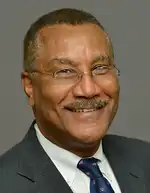
- Section Chemistry
- Location Philadelphia, PA, United States
- Election year 2021
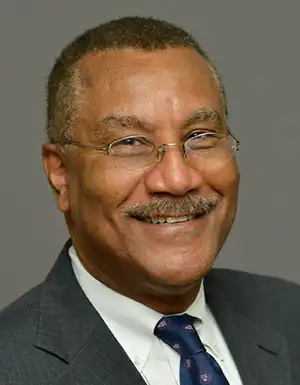
Research
Research Priorities: Atmospheric spectroscopy and photochemistry, aerosol
Joseph Francisco is an American chemist, whose research focuses on the chemical processes in the atmosphere. He is particularly interested in the chemical and photochemical processes on the surfaces of clouds and aerosol.
Joseph Francisco's research has revolutionized our understanding of chemical processes in the atmosphere. He has brought new tools from theoretical chemistry to atmospheric chemical problems in order to enhance our understanding of chemistry in the atmosphere at the molecular level. His main area of research is the chemistry and photochemistry of atmospheric species on the surfaces and interfaces of clouds and aerosol. His discovery of new chemistries occurring on the surfaces of cloud droplets and aerosol have broken new ground in the field of chemistry. For instance, his work on the chemistry at the air-water interface has seen him introduce new concepts in physical chemistry. Joseph Francisco and his team have shown that reactions on the surface of cloud droplets can be accelerated by several orders of magnitude and that in some cases water can serve as an environmentally-friendly catalyst for chemical reactions in the atmosphere. Moreover, his research has revealed that reactions occur at the air-water interface that are not possible in aqueous environments.
These chemistries cannot be described using the established physical chemistry concepts from gas phase chemistry. The chemistry at the air-water interface is therefore defined using a series of new chemical principles. Joseph Francisco has also discovered that the air-water interface creates a unique environment for photochemical reactions. This interface alters the electronic properties of bonds on the surface, causes the spectral characteristics to shift to longer wavelengths (redshift) and enables electronic transitions in the gas phase, thereby triggering photochemical reactions in bonds at the air-water interface.
His research applies to many different fields and has had a significant impact in many areas, including material science, atmospheric science, biophysics and biochemistry, electrochemistry and the environmental sciences.
Joseph Francisco is an American chemist, whose research focuses on the chemical processes in the atmosphere. He is particularly interested in the chemical and photochemical processes on the surfaces of clouds and aerosol.
Joseph Francisco's research has revolutionized our understanding of chemical processes in the atmosphere. He has brought new tools from theoretical chemistry to atmospheric chemical problems in order to enhance our understanding of chemistry in the atmosphere at the molecular level. His main area of research is the chemistry and photochemistry of atmospheric species on the surfaces and interfaces of clouds and aerosol. His discovery of new chemistries occurring on the surfaces of cloud droplets and aerosol have broken new ground in the field of chemistry. For instance, his work on the chemistry at the air-water interface has seen him introduce new concepts in physical chemistry. Joseph Francisco and his team have shown that reactions on the surface of cloud droplets can be accelerated by several orders of magnitude and that in some cases water can serve as an environmentally-friendly catalyst for chemical reactions in the atmosphere. Moreover, his research has revealed that reactions occur at the air-water interface that are not possible in aqueous environments.
These chemistries cannot be described using the established physical chemistry concepts from gas phase chemistry. The chemistry at the air-water interface is therefore defined using a series of new chemical principles. Joseph Francisco has also discovered that the air-water interface creates a unique environment for photochemical reactions. This interface alters the electronic properties of bonds on the surface, causes the spectral characteristics to shift to longer wavelengths (redshift) and enables electronic transitions in the gas phase, thereby triggering photochemical reactions in bonds at the air-water interface.
His research applies to many different fields and has had a significant impact in many areas, including material science, atmospheric science, biophysics and biochemistry, electrochemistry and the environmental sciences.
Career
- since 2018 President’s Distinguished Professor, University of Pennsylvania, Philadelphia, USA
- 2017 Honorary Professor, Beijing University of Chemical Technology, Beijing, China
- 2014‐2018 Dean, College of Arts and Sciences, University of Nebraska‐Lincoln, Lincoln, USA
- 2014‐2016 Visiting Professor, University Paris‐Est (UPEC), Paris, France
- 2012 Visiting Professor, Uppsala University, Uppsala, Sweden
- 2011 Visiting Professor, University Paris‐Est Créteil Val de Marne (UPEC), Paris, France
- 2010‐2013 Associate Dean, Purdue University, West Lafayette, USA
- 2006 William E. Moore Distinguished Professor of Earth and Atmospheric Sciences and Chemistry, Purdue University, West Lafayette, USA
- 2004 Visiting Scholar, University of Bologna, Bologna, Italy
- 2003 Visiting Professor, University of Duisburg‐Essen (UDE), Essen, Germany
- 1998 Visiting Professor, Williams College, Williamstown, USA
- 1995‐2014 Professor, Purdue University, West Lafayette, USA
- 1993 Visiting Scholar, Jet Propulsion Laboratory (JPL), Caltech – California Institute of Technology, Pasadena, USA
- 1991 Visiting Scholar, Caltech – California Institute of Technology, Pasadena, USA
- 1990‐1994 Professor, Wayne State University, Detroit, USA
- 1986‐1990 Lecturer, Wayne State University, Detroit, USA
- 1985‐1986 Postdoctoral Fellow, Massachusetts Institute of Technology (MIT), Cambridge, USA
- 1983‐1985 Research Fellow, University of Cambridge, Cambridge, UK
- 1983 PhD, Massachusetts Institute of Technology (MIT), Cambridge, USA
- 1977 BSc in Chemistry, The University of Texas, Austin, USA
Functions
- since 2021 Member, Council, American Academy of Arts and Sciences, USA
- since 2020 Member, Council, National Academy of Sciences (NAS), USA
- since 2020 Member, Governing Board, National Research Council, USA
- 2014‐2019 Member, International Advisory Board, Alexander von Humboldt Foundation, Bonn, Germany
- 2010‐2015 Member, President´s Committee on the National Medal of Science, National Science Foundation (NSF), USA
- 2009‐2010 President, American Chemical Society (ACS), USA
- 2006‐2008 President, National Organization for the Professional Advancement of Black Chemists and Chemical Engineers, USA
Honours and Memberships
- since 2022 Willard Gibbs Medal, American Chemical Society (ACS), USA
- since 2021 Member, American Philosophical Society, USA
- since 2021 Member, German National Academy of Sciences Leopoldina
- since 2018 President’s Distinguished Professor of Earth and Environmental Science, USA
- since 2013 Member, National Academy of Sciences (NAS), USA
- since 2012 Fellow, American Chemical Society (ACS), USA
- 2011 Edward W. Morley Medal, American Chemical Society (ACS), USA
- since 2010 Fellow, American Academy of Arts and Sciences, USA
- since 2001 Fellow, American Association for the Advancement of Science (AAAS), USA
- 2001 Humboldt Research Award for U.S. Senior Scientists, Alexander von Humboldt Foundation, Bonn, Germany
- since 1998 Fellow, American Physical Society (APS), USA
- 1995 Mentor Award, American Association for the Advancement of Science (AAAS), USA
- 1993 Guggenheim Fellowship, John Simon Guggenheim Memorial Foundation, New York City, USA
- 1992 Outstanding Teacher Award, National Organization for the Professional Advancement of Black Chemists and Chemical Engineers, USA
- 1990‐1995 Camille and Henry Dreyfus Teacher‐Scholar Award, Dreyfus Foundation, New York City, USA
- 1990 Alfred P. Sloan Fellowship, Sloan Foundation, New York City, USA
- 1988 Presidential Young Investigator Award, National Science Foundation (NSF), USA