Professor Dr Karl Ritter von Frisch (✝︎)
Nobel Prize for Physiology or Medicine 1973
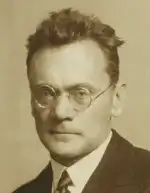
- Location München, Germany
- Election year 1935
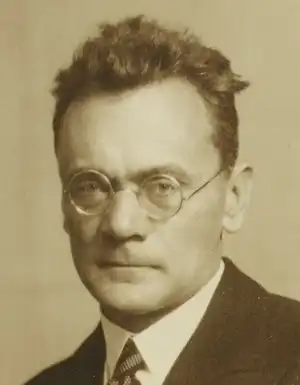
Research
Karl Ritter von Frisch was an Austrian zoologist and ethologist. His work centred on the exploration of the sensory perception of honey bees, as well as their methods of communicating with each other. In 1973, von Frisch was awarded the Nobel Prize in Physiology or Medicine, jointly with the Austrian zoologist Konrad Lorenz and the Dutch zoologist and ethologist Nikolaas Tinbergen for their discoveries concerning the organisation and elicitation of individual and social behaviour patterns.
Person
Karl Ritter von Frisch was born in Vienna on 20 November 1886 as the youngest of four sons to the surgeon and professor Anton Ritter von Frisch and his wife Marie, née Exner. He attended the Schottengymnasium in Vienna, from which he graduated in 1905.
On 20 July 1917, he married Margarete Mohn, with whom he had three daughters and one son. His son Otto von Frisch was the director of the Natural History Museum in Braunschweig from 1977 to 1995.
Karl Ritter von Frisch died on 12 June 1982 in Munich.
In his honour, the Karl-von-Frisch Prize has been awarded every year since 1993 for outstanding achievements in biology to secondary school graduates by the German Life Sciences Association (VBIO).
Career
In 1905, von Frisch enrolled at the University of Vienna to study medicine. After graduating in medicine in 1907, he turned towards zoology, which he studied in Munich for three semesters, before returning to Vienna, where he earned his doctorate in 1910. In 1911, he became an assistant at the Zoological Institute at the University of Munich. There he received his habilitation in 1912. During the First World War, he worked for the Austrian Red Cross from 1914 to 1916.
At the beginning of 1919, he returned to Munich. In 1921, he accepted a position as full professor and director of the Zoological Institute at the University of Rostock. In 1923, he transferred to the University of Wrocław. A year later, he founded the “Journal of Comparative Physiology” together with zoologist Alfred Kühn. In 1925, he received an offer from the University of Munich, where he was able to set up a new institute with funding from the Rockefeller Foundation. As his grandmother was Jewish, von Frisch struggled to maintain his position during the Third Reich. However, his research on the increase of honey production as well as on nosemosis, a disease that often wipes out entire bee colonies, was relevant in providing food for the population, so von Frisch was ultimately able to continue his work.
After his Zoological Institute in Munich was destroyed in the Second World War, von Frisch temporarily moved to Graz, but returned to the reopened institute in Munich in 1950, where he remained until his retirement eight years later.
Karl Ritter von Frisch became known above all for his scientific work on honey bees. He studied their sense of smell, hearing and orientation. He also wrote popular science books, as giving lay people an understanding of science was one of his biggest concerns.
Von Frisch also studied other animals. Among other things, he discovered that fish could see colours, which had been widely disputed.
Honours and Memberships
Von Frisch received numerous awards, such as the Ignaz Lieben Prize for Physiology of the Austrian Academy of Sciences (1921), the Erzherzog Rainer-Medaille of the Zoological-botanical Society of Vienna (1923), the Order Pour le Mérite for Sciences and the Arts (1952), the Honorary Ring of the City of Vienna (1956), the Kalinga Prize for the Popularization of Science (1958), the Bavarian Order of Merit (1959), the Austrian Decoration for Science and Art (1960), the Balzan Prize for Biology (1962), the Great Cross of Merit of the Federal Republic of Germany with Star on Shoulderslash (1974), as well as the Bavarian Maximilian Order for Science and Art (1981).
He was also a member of numerous academies and scientific associations, such as the Danzig Research Society (1924), the Bavarian Academy of Sciences and Humanities (1926), as well as the German National Academy of Sciences Leopoldina (1935).
Nobel Prize
Karl Ritter von Frisch investigated complex information systems of insects based on the honey bee. He discovered their round dance and waggle dance, which he identified as elements of the language bees use to transmit information about the distance and direction of a food source to conspecifics. Further observations and experiments led to the discovery that bees can follow the directions of a food source even when the sun is covered, as they can detect the sun’s position through the vibration direction of the polarised light. Von Frisch also succeeded in training his test animals to react to certain colours.
For these scientific works, Karl Ritter von Frisch was awarded the Nobel Prize in Physiology or Medicine in 1973. This led to a higher recognition of the study of animal behaviour, earning its own scientific branch. Ethology thus received a strong promotion as a branch of biological science.