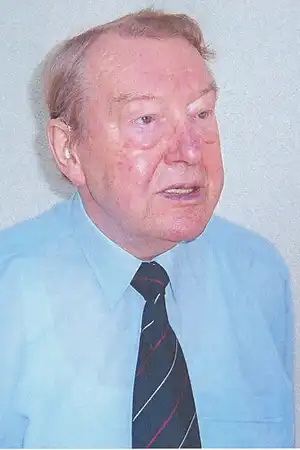
Prof. Dr. Manfred Schulz (✝︎)
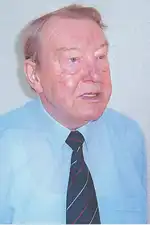
- Section Chemistry
- Location Merseburg, Germany
- Election year 1988
Research
Manfred Schulz hat viele bedeutende Beiträge auf den Gebieten der Peroxid-Chemie (Synthesen, Reaktionen), der Autoxidationschemie, der Radikalchemie, der Reaktionsmechanismen von N-haltigen Antioxidantien und der Zuckerchemie (neuer Zuckerabbau durch 5-Zentren-Fragmentierung von Peroxyglycosiden) geleistet. Erwähnenswert sind außerdem eine neue Diaziridin-Synthese durch photochemische Cyclisierung von Azomethiniminen sowie die photochemischen Reaktionen von Pyrazolidin-3-betainen mit Singulett-Sauerstoff. Über die erstmalige Synthese von ß-Bromalkylhydroperoxiden wurde die Synthese von 4-Ringperoxiden, einer bisher umstrittenen Peroxid-Verbindungsklasse, möglich.
Manfred Schulz is distinguished for many important contributions to the chemistry of organic peroxides (syntheses, reactions, analysis), the chemistry of autoxidation, the free-radical chemistry (syntheses of many new N-containing radicals). He studied the reaction mechanisms of N-containing antioxidans and the new sugar degradation via 5-center fragmentation of peroxy glycosides. Furthermore, a new diaziridine synthesis by photochemical cyclisation of azomethinimines, the photochemical reactions of pyrazolidine-3-betaines with singlet oxygen and the new synthesis of ß-bromine alkylhydroperoxides enabling the synthesis of 4-ring peroxides have been realized.
Manfred Schulz is distinguished for many important contributions to the chemistry of organic peroxides (syntheses, reactions, analysis), the chemistry of autoxidation, the free-radical chemistry (syntheses of many new N-containing radicals). He studied the reaction mechanisms of N-containing antioxidans and the new sugar degradation via 5-center fragmentation of peroxy glycosides. Furthermore, a new diaziridine synthesis by photochemical cyclisation of azomethinimines, the photochemical reactions of pyrazolidine-3-betaines with singlet oxygen and the new synthesis of ß-bromine alkylhydroperoxides enabling the synthesis of 4-ring peroxides have been realized.