Nikolaj G. Basov (✝︎)
Nobel Prize for Physics 1964
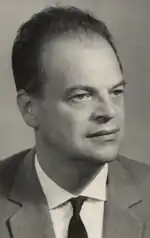
- Section Physics
- Location Moskau, Russian Federation
- Election year 1971
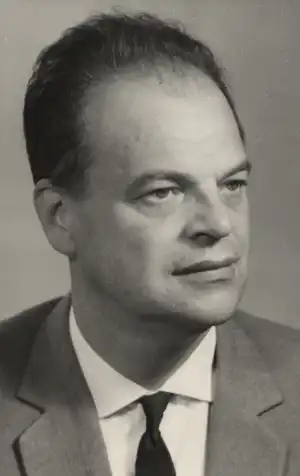
Research
Nikolai Gennadyevich Basov was a Russian physicist. He is considered one of the founders of quantum electronics. Nikolaj Basov's work led to the construction of oscillators and amplifiers based on the maser-laser principle. He received the Nobel Prize in Physics for this work in 1964.
Career
After the Second World War, Nikolaj Basov began studying physics at the Institute of Physical Technology in Moscow at the age of 24, which he completed in 1950. He worked at this institution for the next three years as a research assistant. At the same time, he worked on his doctoral thesis at the Lebedev Institute of Physics in Moscow, which belonged to the Academy of Sciences.
As early as 1952, he turned to quantum radiophysics and started conducting theoretical and later practical experiments on the development and construction of oscillators. In 1956, he received his doctorate with a thesis on molecular oscillators. He was appointed deputy director at the Lebedev Institute and then director two years later in 1973.
Together with a group of young Russian physicists, he succeeded in building a quantum generator for generating and amplifying electromagnetic radiation based on the maser principle. (Maser stands for microwave amplification by stimulated emission of radiation).
Later, the group went one step further by attempting to transfer the maser principle to optical frequency ranges. On that basis, Nikolaj Basov finally succeeded in developing a high-power laser in 1963. Subsequently, he worked on using lasers for optical computers and later also for television sets. At Basov's suggestion, an office was founded near Moscow to promote the technical utilisation of laser research.
Honours and Memberships
Nikolaj Basov was a member of numerous societies and organisations, including the Soviet Academy of Sciences (1966) and the German Academy of Natural Sciences Leopoldina (1971). He was also a member of the World Peace Council. He received the Order of Lenin (1959), the Nobel Prize in Physics (1964), the Volta Medal of the Italian Physical Society (1977), the State Prize of the USSR (1989) and the Lomonosov Gold Medal of the Russian Academy of Sciences in the same year.
Nobel Prize
The maser effect was discovered and practically implemented in 1954 by the American physicist Charles Hard Townes. Similar to the laser effect, the maser is based on the principle of stimulated emission developed by Einstein, which, however, could not be practically verified for a long time. It states that radiation absorption must be confronted with a complementary process of radiation emission.
The practical implementation of this theory was promoted by, of all things, the political situation at the time: innovative military technology such as improved radar systems or tap-proof radio relay connections were sought after equally by the USA and the Soviet Union, which were hostile towards each other. In order to realise such applications, higher-frequency radiation was needed.
From 1957, Nikolaj Basov worked at the Lebedev Institute on the transfer of the maser principle to the optical field. At the same time, the American Charles Townes was working on the same problem. Only one year later, Charles Townes succeeded in theoretically proving the feasibility of lasers. This marked the beginning of an international race to build optical masers and lasers.
Nikolaj Basov's merit lay above all in the theoretical clarification of the understanding of lasers. In doing so, he also provided the basis for developing numerous types of lasers in the Soviet Union. For his work in this field, he received the Nobel Prize in Physics in 1964 together with his teacher Alexander Mikhailovich Prokhorov and the American Charles Hard Townes.