Professor Dr Omar M. Yaghi
Nobel Prize for Chemistry 2025
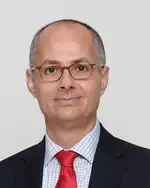
- Section Chemistry
- Location Berkeley, CA, United States
- Election year 2022
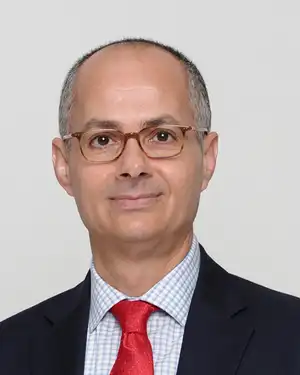
Research
Research Priorities: Reticular chemistry, metal-organic and covalent organic framework structures, zeolitic imidazolate frameworks, molecular weaving, Ultra-porous crystals for water harvesting from air and carbon capture among other gases and liquids.
Omar M. Yaghi is a US-American chemist and materials scientist. The scientist has developed several classes of new materials with very large surface areas as well as very low densities, which make them ideally suited to numerous tasks in scientific and economic applications. Omar M. Yaghi has thus opened a new field in chemistry, reticular chemistry, and provided the impetus for developing materials with completely new properties.
In 1995, Omar M. Yaghi succeeded for the first time in producing a metal-organic framework (MOF), whose metal ions are linked via charged organic connectors known as carboxylates. This was novel, as at that time hybrid organic and inorganic solid-state synthesis was still a long way apart.
Firstly, the strong metal-carboxylate bonds provide an architecturally robust framework and a permanently porous quality. Secondly, metal-carboxylate clusters, so-called secondary building units (SBUs), can be produced and further developed into metal-organic structures with extremely high porosity. The porosity of a substance or mixture of substances describes the ratio of void volume to total volume.
At the beginning of the millennium, the chemist extended his research to discover covalent organic frameworks (COFs) and zeolitic imidazolate frameworks. This enabled the production of crystals with ultra-porous structure, which had the lowest density known for crystals until that time. The very strong bonds within the metal-organic and covalent organic frameworks developed in this way enable their application for industrial use over thousands of cycles.
These ultra-porous crystals can also be precisely designed to form the basis of materials that can be used for storing hydrogen, methane or carbon dioxide as well as for the purification of polluted or contaminated air. It is also possible to collect and store water from desert air by using these highly porous materials.
Omar M. Yaghi’s research is highly relevant to society, as materials developed in this way can also be used on a large scale to purify gases or liquids on the one hand and to collect and store them on the other. This is of interest to many disciplines, from drug production and the energy industry to medicine and environmental technology.
Career
- since 2012 Professor of Chemistry, University of California (UC) - Berkeley, Berkeley, USA
- 2006-2011 Professor of Chemistry, University of California - Los Angeles (UCLA), Los Angeles, USA
- 1999-2006 Professor of Chemistry, University of Michigan, Ann Arbor, USA
- 1992-1998 Assistant Professor of Chemistry, Arizona State University (ASU), Tempe, USA
- 1990-1992 Postdoctoral Fellow, National Science Foundation (NSF), Harvard University, Cambridge, USA
- 1986-1990 PhD in Chemistry, University of Illinois-Urbana, Champaign, USA
- 1983-1985 Bachelor of Science (BSc) in Chemistry, University at Albany, The State University of New York, Albany, USA
Functions
- since 2022 Co-Director, Bakar Institute of Digital Materials for the Planet (BIDMaP), UC Berkeley, Berkeley, USA
- since 2014 Co-Director, California Research Alliance by BASF (CARA), UC Berkeley, Berkeley, USA
- since 2014 Director, Berkeley Global Science Institute, UC Berkeley, Berkeley, USA
- since 2014 Co-Editor, Journal of the American Chemical Society, USA
- since 2013 Co-Director, Kavli Energy NanoScience Institute (ENSI), UC Berkeley, Berkeley, USA
Projects
- since 2022 Programme “NSF-DFG Lead Agency Activity in Chemistry and Transport in Confined Spaces”, National Science Foundation (NSF), USA, and German Research Foundation (Deutsche Forschungsgemeinschaft, DFG), Germany
Honours and Memberships
- 2025 Nobelprize in Chemistry (together with Susumu Kitagawa and Richard Robson), Royal Swedish Academy of Sciences, Sweden
- 2024 Balzan Prize, International Balzan Prize Foundation, Milan, Italy
- 2022 Member, German National Academy of Sciences Leopoldina, Germany
- 2020 August Wilhelm von Hofmann Commemorative Coin, German Chemical Society (GDCh), Germany
- 2019 Elected Member, National Academy of Sciences, USA
- 2019 Gregori Aminoff Prize, Royal Swedish Academy of Sciences, Sweden
- 2018 Wolf Prize in Chemistry, Wolf Foundation, Herzlia Pituach, Israel
- 2018 Eni Award for Excellence in Energy, Eni, Società per azioni (S.p.A.), Rome, Italy
- 2017 Albert Einstein World Award of Science, World Cultural Council
- 2017 BBVA Foundation Frontiers of Knowledge Award, Fundación Banco Bilbao Vizcaya Argentaria (BBVA), Bilbao, Spain
- 2015 King Faisal Prize in Science (KFP), King Faisal Foundation (KFF), Riyadh, Saudi Arabia
- 2010 Centenary Prize, Royal Society of Chemistry, UK