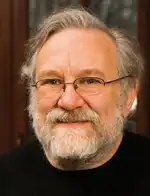
Professor Dr Peter Walter
- Section Genetics/Molecular Biology and Cell Biology
- Location San Francisco, CA, United States
- Election year 2006
Research
Research Priorities: Cell biology, protein folding, fusion of cell membranes, unfolded protein response
Peter Walter a biochemist and molecular biologist. He works in the field of cell biology. Above all he is concerned with the mechanisms of protein folding, the transport of proteins to their target areas in the cells, the size and number regulation of organelles in the cells, and the fusion of cell membranes.
Fundamental contributions were made by Peter Walter to elucidating the Unfolded Protein Response (UPR). This is a signalling pathway that prevents mistakes in the folding of proteins within the endoplasmic reticulum. It protects the cell when it is exposed to stress. Peter Walter co-discovered the enzyme Ire1, a serine-threonine kinase and endoribonuclease of central importance. As part of the UPR, he is researching among other things how Ire1 recognises misfolded proteins.
He also discovered the so-called Signal Recognition Particle. This ribonuclear protein complex is part of the transport of proteins into the endoplasmic reticulum (in eukaryotes) and into the plasma membrane (in prokaryotes).
Peter Walter a biochemist and molecular biologist. He works in the field of cell biology. Above all he is concerned with the mechanisms of protein folding, the transport of proteins to their target areas in the cells, the size and number regulation of organelles in the cells, and the fusion of cell membranes.
Fundamental contributions were made by Peter Walter to elucidating the Unfolded Protein Response (UPR). This is a signalling pathway that prevents mistakes in the folding of proteins within the endoplasmic reticulum. It protects the cell when it is exposed to stress. Peter Walter co-discovered the enzyme Ire1, a serine-threonine kinase and endoribonuclease of central importance. As part of the UPR, he is researching among other things how Ire1 recognises misfolded proteins.
He also discovered the so-called Signal Recognition Particle. This ribonuclear protein complex is part of the transport of proteins into the endoplasmic reticulum (in eukaryotes) and into the plasma membrane (in prokaryotes).
Career
- since 2022 Professor Emeritus, University of California, San Francisco, USA
- 1997-2022 Investigator, Howard Hughes Medical Institute, Chevy Chase, USA
- 1983-2022 Professor of Biochemistry and Biophysics, University of California, San Francisco, USA
- 1982-1983 Assistant Professor, Rockefeller University, New York, USA
- 1981-1982 Postdoc, Rockefeller University, New York, USA
- 1977-1981 Promotion, Rockefeller University, New York, USA
- 1976-1977 Master of Science in Organic Chemistry, Vanderbilt University, Nashville, USA
- 1973-1976 Studies of Chemistry, Freie Universität Berlin, Berlin, Germany
Functions
- 2016 President, American Society for Cell Biology (ASCB), USA
- Member, Scientific Advisory Board, ZMBH (Zentrum für Molekulare Biologie), Heidelberg University, Heidelberg, Germany
Projects
- since 2021 Spokesperson, Research Training Groups (GRK) 2610 “Innovative Retinal interfaces for optimized Artificial Vision – InnoRetVision”, German Research Council (DFG), Germany
- 2015-2020 Applicant, Project “Development of an implantable epiretinal vision prosthesis with integrated image acquisition (OPTOEPIRET)”, DFG, Germany
- 2011-2018 Applicant, Project “Evaluation of implantable BIMEA stimulators with optimized stimulations protocols in animal models of receptor degenerations”, DFG, Germany
Honours and Memberships
- 2018 Breakthrough Prize in Life Sciences, Breakthrough Prize Foundation, Washington D.C., USA
- 2015 Vilcek Prize in Biomedical Science, Vilcek Foundation, New York City, USA
- 2014 Shaw Prize, Shaw Prize Foundation, Hongkong, China
- 2014 Albert Lasker Award for Basical Medical Research, Lasker Foundation, New York City, USA
- 2012 Paul Ehrlich & Ludwig-Darmstaedter Prize, Paul Ehrlich Foundation, Frankfurt am Main, Germany
- 2012 Jung-Preis für Medizin, Jung-Stiftung für Wissenschaft und Forschung, Hamburg, Germany
- 2011 Otto Warburg Medal, German Society for Biochemistry and Molecular Biology, Frankfurt am Main, Germany
- 2009 Canada Gairdner International Award, Gairdner Foundation, Toronto, Canada
- 2009 Stein and Moore Award, Protein Society, Boston, USA
- 2009 E.B. Wilson-Medal-, American Society of Cell Biology (ASCB), USA
- since 2006 Member, German National Academy of Sciences Leopoldina, Germany
- 2005 Wiley Prize, Wiley Foundation, Hoboken, USA
- 2004 Member, National Academy of Sciences, USA
- 2004 Member, European Molecular Biology Organisation (EMBO)
- 2002 Member, American Academy of Arts and Sciences, USA
- 1989 Research Fellowship, Alfred P. Sloan Foundation, New York City, USA
- 1988 Young Scientist Award, Passano Foundation, Baltimore, USA
- 1988 Eli Lilly Award in Biological Chemistry, American Chemical Society, USA
- 1983 Searle Scholar Award, The Chicago Community Trust, Chicago, USA