Professor Dr Selman Waksman (✝︎)
Nobel Prize for Physiology or Medicine 1952
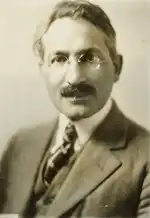
- Location New Brunswick, NJ, United States
- Election year 1932
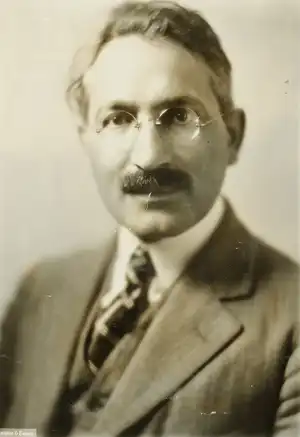
Research
Selman Waksman was a US-American biochemist of Russian birth. Amongst other things he studied the microbiology of soil, especially sulphur oxidation by bacteria, soil fertility, the breakdown of animal and plant residual materials, as well as the production and qualities of antibiotic substances. He coined the term “antibiotic”. In 1940 he isolated the antibiotic and cytostatic agent actinomycin A. Further antibiotic substances followed, amongst them streptomycin in 1943. For the discovery of streptomycin – the first antibiotic against tuberculosis – he was awarded the Nobel Prize for Physiology and Medicine in 1952.
Person
Selman Waksman was born on July 20th 1888 as a son to Jewish parents – Jacob Waksman and his wife Fradia London – in Nowa Pryluka near Kiev, then part of the Russian Empire. He attended the fifth grammar school in Odessa. In 1910 he emigrated to the United States because of political circumstances and the continued persecutions of Jewish people in Russia. He received US-American citizenship in 1916. Waksman was married. In 1919 the couple had their son, Byron, who later became a professor at the University of Chicago’s Marine Biological Laboratory.
Selman Waksman died on August 16th, 1973, in Woods Hole (Massachusetts). Since 1968 the National Academy of Sciences of the United States biannually awards the Selman A. Waksman Award in microbiology in his honor.
Career
Endowed with a stipend, Selman Waksman studied agriculture at Rutgers College (today Rutgers University) in New Jersey, USA. There he completed a Bachelor of Science in 1915 and a Master of Science in 1916. He then went to the University of California, Berkeley, where he gained a PhD in biochemistry in 1918. He later went back to Rutgers College, where he became a professor in 1930. In 1940 he became director of the institute for microbiology.
The next years saw numerous discoveries of antibiotic agents at this institution. Among them was streptomycin in 1944 – the first antibiotic that was effective against tuberculosis. In 1940 Selman Waksman also became the head of the section of marine bacteriology at Woods Hole Oceanographic Institution in Woods Hole (Massachusetts). He retired in 1958.
Honours and Memberships
Selman Waksman received numerous further awards for his work, among them the Amory Prize of the American Academy of Arts and Sciences (1947), the Albert Lasker Award for Basic Medical Research (1948), the Leeuwenhoek Medal and an appointment as a commander of the French Legion of Honour by Prime Minister Charles de Gaulle (both 1950). In 1952 a survey voted him to be one of the 100 most significant persons.
He was member of numerous academies and scientific institutions, among them the German Academy of Sciences Leopoldina (1932), the National Academy of Sciences, and the American Academy of Arts and Sciences (1949).
Nobel Prize
Over many years, Selman Waksman was concerned with the chemical and biological processes in the soil. He collected and analysed soil samples from different strata and isolated and cultivated the microorganisms found therein.
From 1939 he dedicated himself to the development of antibiotic agents. In 1940 he was able to isolate the antibiotic actinomycin A from soil bacteria. Among other substances, streptomycin followed in 1943, which was of especial relevance due to its efficacy against then widespread tuberculosis. Penicillin, which was already discovered was ineffective against the disease.
Streptomycin was first isolated from samples in October 1943 by an assistant of Selman Waksman, the 23-year-old Albert Schatz who gained the samples from the soil in front of the laboratory. Seltman Waksman claimed the discovery for himself and was awarded the Nobel Prize for Physiology and Medicine in 1952.
Already in 1950 it came to a legal battle between Albert Schatz, Seltman Waksman, and Rutgers University. The later two were awarded high sums from the proceeds of the research findings. Seltman Waksman told the court that Albert Schatz had falsified the laboratory notebooks and that the notebooks had temporarily disappeared. The court agreed and after a year-long legal battle the parties reached an agreement. Albert Schatz was acknowledged as a co-discoverer of streptomycin and given a share of the proceeds.
Since then, the notebook that Seltman Waksman claimed to have disappeared was rediscovered in an archive of Rutgers University. Because of that the indication that Seltman Waksman may have deliberately told an untruth in court increased.