Sir Charles Sherrington (✝︎)
Nobel Prize for Physiology or Medicine 1932
- Location Oxford, United Kingdom
- Election year 1925
Research
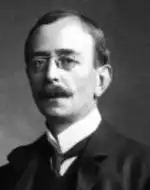
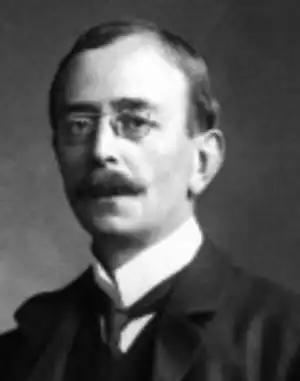
Charles Scott Sherrington was a British physiologistand one of the founders of modern neurophysiology. He studied the brain and the functions of neurons, coining the term “synapse”. In 1932, Sherrington and Edgar Douglas Adrian were jointly awarded the Nobel Prize in Physiology or Medicine for their discoveries on the functions of neurons.
Person
Charles Sherrington was born 27 November 1857 as one of four sons of the doctor James Norton Sherrington and his wife Anne Brookes Thurtell in London. His father passed away when Charles was still a child. His mother later married the archaeologist Caleb Rose in Ipswich, who imparted an interest in art to Charles that would last a lifetime.
From 1871, Sherrington attended Queen Elizabeth‘s School in Ipswich, and later he became a student at Gonville and Caius College in Cambridge. On 27 August 1891 he married Ethel Mary Wright. In 1897, she gave birth to their son Charles Ely Rose „Carr“ Sherrington.
Charles Sherrington died on 4 March 1952 in Eastbourne.
Career
Charles Scott Sherrington received his Bachelor of Arts (B.A.) from the University of Cambridge in 1885, and his M.D. in medicine in the following year. His interest in the nervous system started as early as 1881, when he attended an international medical congress in London, where Friedrich Leopold Goltz, a physiologist from Strasbourg, presented dogs with damaged brains. Sherrington was fascinated by the fact that the animals were still able to react to their environment despite having had parts of their brains removed. He later worked with John Newport Langley, a Cambridge-based physiologist, to study this phenomenon.
Sherrington spent some time in Berlin, where he attended Hermann von Helmholtz’s lectures. In 1887, he was appointed Lecturer in Systematic Physiology at King’s College and at St. Thomas’s Hospital in London, where he was Professor of Physiology and Pathological Research from 1891 to 1895. In 1895, he accepted an offer for the Chair in Physiology at the University of Liverpool. Around this time, Sherrington introduced the term “synapse” into the field of physiology. In 1906, he published a book on the nervous system, establishing terms that are still in use today, such as proprioception and nociceptor.
In 1913, he was invited to become Waynfleet Professor of Physiology at Oxford, where he remained until his retirement in 1936.
Honours and Memberships
Sherrington received numerous awards besides the Nobel Prize for his scientific activities, such as the Royal Medal of the Royal Society London (1905), the Order of Merit (1924), and the Copley Medal of the Royal Society London (1927). Furthermore, he was awarded the Knight Grand Cross of the Most Excellent Order of the British Empire.
Sherrington earned memberships of several academies and scientific institutions, among them the Royal Society (1893), where he served as President from 1920 to 1925, and the German National Academy of Sciences Leopoldina (1925).
He received Honorary Doctorates from the universities of Oxford, London, Sheffield, Birmingham, Manchester, Liverpool, Wales, Edinburgh, Budapest, Athens, Brussels, Bern, Toronto, Montreal, as well as Harvard University.
Nobel Prize
Even as a student, Charles Sherrington was interested in neurophysiological issues. He studied reflexes such as the patellar reflex of the knee cap. Furthermore, he analysed the excitation and inhibition processes in the nervous system and introduced the term “synapse” in 1924. He mapped the motor areas of the cerebral cortex, determining the body regions activated by each motor centre.
Through animal experiments, he proved that stretching a muscle results in the diffraction of the respective muscular counterpart, a mechanism that is based on various individual reflexes controlled by nerve excitation.
Sherrington was able to confirm the principles behind his discoveries through a series of experiments in which he stimulated individual points in the spinal cord, muscles and nerves. A myograph was connected during these experiments and the stimulations caused curves, documenting the response.
Thanks to the extensive contributions he made, Sherrington is considered to be the founder of modern neurophysiology. In 1932, Charles Scott Sherrington and Edgar Douglas Adrian were jointly awarded the Nobel Prize in Physiology or Medicine for their discoveries in the field of neuron functions.