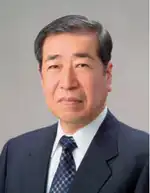
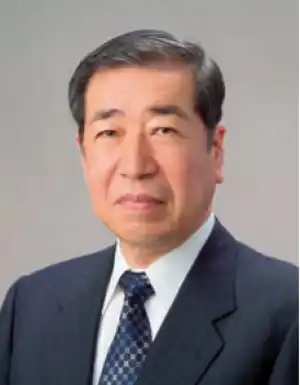
Professor Dr Tadamitsu Kishimoto
- Section Microbiology and Immunology
- Location Osaka, Japan
- Election year 2005
Research
Research Priorities: Cytokines, autoimmune diseases, signal transduction
Tadamitsu Kishimoto is a Japanese immunologist, whose research focuses on antibody overreaction in humans. He discovered the importance of regulating cytokine signal transduction. Besides making important contributions to basic research, Kishimoto has initiated specific clinical and therapeutic advancements by developing antibodies against interleukin receptors. In doing so, he helped to develop a new treatment for chronic inflammatory diseases. A number of medications used to treat specific immune disorders and cancers can also be attributed to his research.
Kishimoto is regarded as a pioneer in the exploration of the biological role of cytokines, which are produced by immune cells and are responsible for the immune response. Although cytokines are essential for life, their overproduction causes various conditions, such as inflammation, autoimmune diseases and malignant tumours. Kishimoto discovered the interleukin-6 cytokine (IL-6) and cloned the IL-6 gene. He also identified the mechanism with which cytokines activate immune cells. His research focuses on the regulation of signal transduction with the objective of reducing diseases triggered by the overproduction of cytokines, such as rheumatoid arthritis, Castleman disease and multiple myeloma.
Tadamitsu Kishimoto is a Japanese immunologist, whose research focuses on antibody overreaction in humans. He discovered the importance of regulating cytokine signal transduction. Besides making important contributions to basic research, Kishimoto has initiated specific clinical and therapeutic advancements by developing antibodies against interleukin receptors. In doing so, he helped to develop a new treatment for chronic inflammatory diseases. A number of medications used to treat specific immune disorders and cancers can also be attributed to his research.
Kishimoto is regarded as a pioneer in the exploration of the biological role of cytokines, which are produced by immune cells and are responsible for the immune response. Although cytokines are essential for life, their overproduction causes various conditions, such as inflammation, autoimmune diseases and malignant tumours. Kishimoto discovered the interleukin-6 cytokine (IL-6) and cloned the IL-6 gene. He also identified the mechanism with which cytokines activate immune cells. His research focuses on the regulation of signal transduction with the objective of reducing diseases triggered by the overproduction of cytokines, such as rheumatoid arthritis, Castleman disease and multiple myeloma.
Career
- since 2011 Specially Appointed Professor, Osaka University Immunology Frontier Research Center, Osaka University, Osaka, Japan
- 2003-2011 Professor, Graduate School of Frontier Biosciences, Osaka University, Osaka, Japan
- 1997-2003 President, Osaka University, Japan
- 1995-1997 Dean, Graduate School of Medicine, Osaka University, Osaka, Japan
- 1991-1998 Professor, Graduate School of Medicine, Osaka University, Osaka, Japan
- 1983-1997 Professor, Department of Pathology and Medicine, Graduate School of Medicine, Osaka University, Osaka, Japan
- 1983-1991 Professor, Institute for Molecular and Cellular Biology, Osaka University, Osaka, Japan
- 1974-1979 Assistant Professor, Graduate School of Medicine, Osaka University, Osaka, Japan
- 1973-1974 Assistant Professor, Johns Hopkins University School of Medicine, Baltimore, USA
- 1970-1973 Research Associate, Johns Hopkins University School of Medicine, Baltimore, USA
- 1969-1972 Instructor, School of Dentistry, Kyushu University, Fukuoka, Japan
- 1969 Doctorate, Division of Medicine, Osaka University, Osaka, Japan
Honours and Memberships
- 2021 Clarivate Citation Laureate, Clarivate Analytics, Philadelphia, USA and London, UK
- 2018 ICIS Distinguished Service Award, International Cytokine & Interferon Society (ICIS)
- 2017 King Faisal International Prize, King Faisal Foundation, Riyadh, Saudi Arabia
- 2011 Japan Prize, Science and Technology Foundation of Japan (JSTF), Japan
- 2009 Crafoord Prize, Royal Swedish Academy of Sciences, Sweden
- 2006 Honorary Lifetime Membership Award, ICIS
- since 2005 Member, German National Academy of Sciences Leopoldina, Germany
- 2004 Clemens von Pirquet Distinguished Professor, Department of Medical Microbiology and Immunology, University of California, Davis, USA
- 2003 Robert Koch Gold Medal, Robert Koch Foundation, Berlin, Germany
- since 2002 Honorary Member, World Innovation Foundation
- since 2001 Honorary Member, International Association for Dental Research
- 1999 Donald Seldin Award, International Society of Nephrology
- 1998 Order of Culture, Japan
- since 1997 Honorary Member, American Society of Hematology, USA
- 1996 Avery-Landsteiner Award, German Society for Immunology, Germany
- since 1995 Member, The Japan Academy, Japan
- 1992 Sandoz Award (since 2018: Digital Health Award), Novartis AG, Nuremberg and Sandoz Germany/Hexal, Holzkirchen, Germany
- since 1992 Honorary Member, American Association of Immunologists, USA
- 1991 Scientific Achievement Award, International Association of Allergology and Clinical Immunology
- since 1991 Member, National Academy of Sciences, USA
- 1990 Recognised as a Bunka Kōrōsha (Person of Cultural Merit), Minister of Education, Culture, Sports, Science and Technology, Japan
- 1988 Asahi Prize, Asahi Shimbun-sha, Osaka, Japan
- 1988 Takeda Award, Takeda Oncology, Berlin, Germany
- 1986 Erwin von Bälz Prize, Nippon Boehringer Ingelheim Co. Ltd., Tokyo, Japan
- 1982 Behring-Kitasato Prize, Philipps-Universität Marburg, Germany