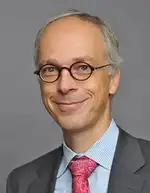
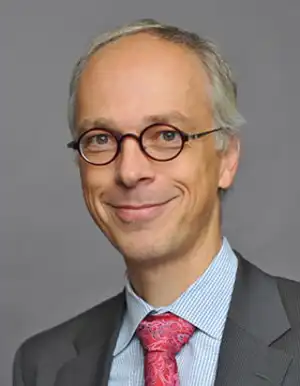
Professor Dr Thomas Tuschl
- Section Human Genetics and Molecular Medicine
- Location New York, United States
- Election year 2009
Research
Research Priorities: functional genome analysis, RNA interference (RNAi), switching off genes, “short interfering RNA” (siRNA), microRNA (miRNA), silencing genes, hereditary diseases
Molecular biologist Thomas Tuschl is researching the human genome. He has developed the method of RNA interference for human cells. The method is an ideal tool for functional genome analysis and has been developed over the last 15 years into a new therapy for treating hereditary diseases.
Since the discovery of the genome, scientists have tried to switch off individual genes in order to understand their function better. Thomas Tuschl has achieved this with the RNA interference (RNAi) method. The phenomenon was previously known from worms and flies. Genes could be immobilised by injecting double-stranded RNA molecules into the animals. Thomas Tuschl discovered that RNA (ribonucleic acid) is firstly broken into short pieces, known as “short interfering RNA” (siRNA), and these disable the gene.
Using these siRNAs Thomas Tuschl could then also switch off human genes in cell cultures. He has thus made RNA interference useful for genome research. Researchers around the world are studying the function of genes in this way. New drugs can be developed on the basis of RNA interference. For example drugs are being clinically researched for a hereditary disease (amyloidosis), in which tiny protein threads damage the organs.
Thomas Tuschl is further researching the regulatory functions of RNA and its variant of microRNA (miRNA). MicroRNAs regulate gene expression and can silence genes. Tuschl wishes to explain the connections between the silencing of genes and hereditary diseases. With his team he is searching for microRNAs which could be linked to diseases. Depending on which messenger RNA affects the miRNA, it can promote or inhibit tumour development for example. Recently he has also been researching the functions of mRNA-binding proteins and developing methods for determining their binding sites.
Career
- 2005-2018 Investigator, Howard Hughes Medical Institute, Chevy Chase, USA
- since 2003 Professor and Laboratory Director, Rockefeller University, New York City, USA
- 1999-2002 Leader, Research Group, Max Planck Institute for Biophysical Chemistry, Göttingen, Germany
- 1995-1999 Postdoctoral Fellow, Massachusetts Institute of Technology (MIT)/Whitehead Institute, Cambridge, USA
- 1995 Doctorate, Max Planck Institute for Experimental Medicine, Göttingen, Germany
- 1992-1995 PhD Student, Max Planck Institute for Experimental Medicine, Göttingen, Germany
- 1992 Diploma in Chemistry, University of Regensburg, Germany
- 1989 Degree in Chemie (Maîtrise in chemistry), Université Joseph Fourier Grenoble I (since 2016: Université Grenoble Alpes), Grenoble, France
Projects
- 2010-2012 Host, Research Fellowship, “Structural studies on mRNA recognition by FMRP and TDP-43, two RNA-binding proteins associated with neuronal diseases”, German Research Foundation (DFG)
- 2009-2014 Subproject, “The role of microRNA in body weight maintenance”, Clinical Research Group 218, DFG
- 2009-2012 Host, Research Fellowship, “Characterization of post-transcriptional regulation of gene expression in heart diseases”, DFG
- 2008-2011 Host, Research Fellowship, “Expression and function of ‘hnRNP K - miRNA - mRNA – complexes’ in acute myeloid and lymphatic leukaemia in childhood”, DFG
Honours and Memberships
- since 2026 Member, National Academy of Sciences (NAS), USA
- 2014 Finalist, European Inventor Award, European Patent Office
- 2012 NIH Director’s Transformative Research Project Award, National Institutes of Health (NIH), Bethesda, USA
- since 2009 Member, German National Academy of Sciences Leopoldina, Germany
- 2008 Ernst Jung Prize, Jung Foundation for Science and Research, Hamburg, Germany
- 2007 Max Delbrück Medal, Max-Delbrück Center for Molecular Medicine, Berlin, Germany
- 2007 Karl Heinz Beckurts Prize, Karl Heinz Beckurts Foundation, Zeuthen, Germany
- 2005 Ernst Schering Prize, Ernst Schering Foundation, Berlin, Germany
- 2005 Meyenburg Prize, Meyenburg Foundation, Heidelberg, Germany
- 2005 Dr. Albert Wander Gedenk Prize, Bern, Switzerland
- 2006 Molecular Bioanalytics Prize, (German) Society for Biochemistry and Molecular Biology, Germany and Roche Diagnostics, Rotkreuz, Schweiz
- 2003 Mayor’s Award for Excellence in Science and Technology, New York City, USA
- 2003 Wiley Prize in Biomedical Sciences, The Wiley Foundation, Hoboken, USA
- 2003 Newcomb Cleveland Prize, American Association for the Advancement of Science, USA
- 2002 Eppendorf Award for Young European Investigators, Eppendorf SE, Hamburg, Germany
- 2002 Prize for Chemistry and Physics, Otto Klung Weberbank, Berlin, Germany
- 2002 Fellowship, Chemical Industry Fund, German Chemical Industry Association (VCI), Germany
- 2001 Springer Young Investigator Award, German-French Society for Cell Biology
- 2001 Young Investigator, European Molecular Biology Organization
- 1999 BioFuture Prize, Federal Ministry of Education and Research, Germany
- 1997-1998 Merck/MIT Postdoctoral Fellowship, Cambridge, USA
- 1995-1997 Fellowship, DFG, Germany