Professor Dr Uta Frith
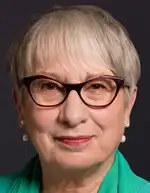
- Section Psychology and Cognitive Sciences
- Location London, United Kingdom
- Election year 2008
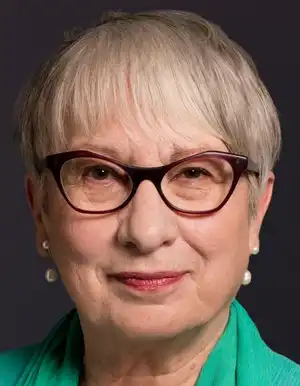
Research
Research Priorities: Autism spectrum disorders, dyslexia, social cognition, neuroscience and learning
Uta Frith is a German-British developmental psychologist and neuroscientist. She established a novel approach to cognitive developmental disorders based on neuropsychological research. The research group, which she led, succeeded in identifying specific cognitive deficits in autism and dyslexia, and in tracing their basis in the brain.
Uta Frith employed methods from experimental psychology to understand novel cognitive processes like “Theory of Mind” and “Central Coherence”. Having a Theory of Mind means to intuitively track what others think and how they will likely react. Central Coherence refers to the drive to prioritize gist over detail, while detail focus prioritizes detail over gist. She showed that impairments in social communication that are characteristic of autism can be explained by a weakness in “Theory of Mind”. At the same time superior performance in autism can be partly explained by a preference for detail focus, as seen in distinct patterns of attention and a facility in detecting hidden figures.
Uta Frith successfully developed a nuanced description of different forms of autism. Since the 1980s, a mild form of autism was called “Asperger’s syndrome” after the Austrian paediatrician Hans Asperger. By translating and interpreting Asperger’s seminal paper, Uta Frith contributed towards a new view of an autism spectrum that also encompassed individuals with high ability and talents.
Uta Frith’s second focus is on the reading and spelling disorders known as “dyslexia”. A weakness in phonological information processing is today considered the predominant cause of dyslexia in alphabetic languages, where readers have to learn how to map distinct speech sounds to letters. With colleagues Uta Frith pursued this hypothesis and discovered that Italian speaking dyslexics showed the identical brain abnormality while performing phonological tasks as English-speaking dyslexics, despite large cultural differences in their reading and spelling, due to differences in orthographic regularity.
While Uta Frith searched for the underlying cognitive causes of autism and dyslexia, she developed a framework that makes connections between brain and behaviour via the cognitive level. She proposed that disturbances at the cognitive level form an identifiable nexus in the otherwise obscure and complex relationships between brain, mind and behaviour.
Uta Frith is a German-British developmental psychologist and neuroscientist. She established a novel approach to cognitive developmental disorders based on neuropsychological research. The research group, which she led, succeeded in identifying specific cognitive deficits in autism and dyslexia, and in tracing their basis in the brain.
Uta Frith employed methods from experimental psychology to understand novel cognitive processes like “Theory of Mind” and “Central Coherence”. Having a Theory of Mind means to intuitively track what others think and how they will likely react. Central Coherence refers to the drive to prioritize gist over detail, while detail focus prioritizes detail over gist. She showed that impairments in social communication that are characteristic of autism can be explained by a weakness in “Theory of Mind”. At the same time superior performance in autism can be partly explained by a preference for detail focus, as seen in distinct patterns of attention and a facility in detecting hidden figures.
Uta Frith successfully developed a nuanced description of different forms of autism. Since the 1980s, a mild form of autism was called “Asperger’s syndrome” after the Austrian paediatrician Hans Asperger. By translating and interpreting Asperger’s seminal paper, Uta Frith contributed towards a new view of an autism spectrum that also encompassed individuals with high ability and talents.
Uta Frith’s second focus is on the reading and spelling disorders known as “dyslexia”. A weakness in phonological information processing is today considered the predominant cause of dyslexia in alphabetic languages, where readers have to learn how to map distinct speech sounds to letters. With colleagues Uta Frith pursued this hypothesis and discovered that Italian speaking dyslexics showed the identical brain abnormality while performing phonological tasks as English-speaking dyslexics, despite large cultural differences in their reading and spelling, due to differences in orthographic regularity.
While Uta Frith searched for the underlying cognitive causes of autism and dyslexia, she developed a framework that makes connections between brain and behaviour via the cognitive level. She proposed that disturbances at the cognitive level form an identifiable nexus in the otherwise obscure and complex relationships between brain, mind and behaviour.
Career
- 2007-2015 Guest Professor, Aarhus University, Aarhus, Denmark
- since 2006 Emeritus Professor, Cognitive Development, Institute of Cognitive Science, University College London, London, UK
- 1996-2006 Professor of Cognitive Development, Institute of Cognitive Science, University College London, London, UK
- 1982-1998 Member, Medical Research Council (MRC), Cognitive Development Unit, University College London, London, UK
- 1968-1982 Member, Medical Research Council (MRC), Developmental Psychology Unit, University College London, London, UK
- 1968 PhD, University College London, London, UK
- 1966 Diploma in Abnormal Psychology, Institute of Psychiatry, University of London, London, UK
- 1961-1964 Studies in Psychology, Universität des Saarlandes, Saarbrücken, Germany
Functions
- 2017 President, British Science Association (BSA), UK
- 2015-2018 Member, Council, Royal Society, UK
- 2015-2018 Chair, Diversity Committee, Royal Society, UK
- 2014 Fellow, Institute for Advanced Studies, Central European University, Budapest, Hungary
- 2009-2012 Chair, Library Committee, Royal Society, UK
- 2008-2011 Chair, Section 6 “Psychology”, British Academy, UK
- 2006-2009 Member, Panel, Faraday Prize, Rosalind Franklin Prize and Ralph Kohn Prize, Royal Society, UK
- 2006-2007 President, Experimental Psychology Society, London, UK
- 2006-2007 Member, Council, Royal Society, UK
Projects
- 2006-2011 Niels Bohr Project “Interacting Minds”, Aarhus University, Aarhus, Denmark
- 1998-2006 Chair, Grant, Medical Research Council (MRC), UK Research and Innovation (UKRI), UK
- 1996-1999 European Project on Reading and Dyslexia, Italy, France, and UK
Honours and Memberships
- 2022 Honorary Doctorate, Brunel University, Uxbridge, UK
- 2016 Honorary Doctorate, University of Bath, Bath, UK
- 2015 Honorary Doctorate, University of Aston, Aston, UK
- 2014 Jean-Nicod Prize (together with Chris Frith), Institut Jean Nicod, Paris, France
- 2013 William James Fellow Award, Association for Psychological Science (APS), USA
- 2012 Honorary Fellow, BSA, London, UK
- 2012 Dame Commander, Order of the British Empire, UK
- 2012 Honorary Doctorate, University of Cambridge, Cambridge, UK
- 2010 Mind & Brain Prize, Centre for Cognitive Science, University of Turin, Turin, Italy
- 2009 European Latsis Prize (together with Chris Frith), European Science Foundation, Strasbourg, France
- 2009 Research Board Lifetime Achievement Award, British Psychological Society, UK
- since 2008 Member, German National Academy of Sciences Leopoldina, Germany
- 2008 Woman of Outstanding Achievement, UK Resource Centre (UKRC) for Women in Science, Engineering and Technology (SET), Bradford, UK
- 2007 Lifetime Achievement Award, International Association for Autism Research, USA
- 2007 Samuel T. Orton Award, International Dyslexia Association, USA
- since 2007 Honorary Member, Department of German, University College London, London, UK
- 2007 Honorary Doctorate, Nottingham University, Nottingham, UK
- since 2005 Fellow, Royal Society, UK
- 2004 Honorary Doctorate, University of York, York, UK
- 2004 Honorary Doctorate, University of Palermo, Palermo, Italy
- since 2001 Fellow, British Academy, UK
- since 2001 Fellow, Academy of Medical Sciences, London, UK
- 2000 Honorary Doctorate, University of St Andrews, St Andrews, UK
- 1998 Honorary Doctorate, University of Gothenburg, Gothenburg, Sweden
- 1992 Member, Academia Europaea