- Economics and Empirical Social Sciences
- Election year 2009
Simpler recognition of qualifications and professional mobility would therefore be important steps towards establishing science as a fifth freedom in the European Union — alongside the free movement of goods, the free movement of persons, the freedom to provide services and the free movement of capital. These four freedoms were introduced to create a common market in the European Union and thereby help the economies of the Member States to grow.
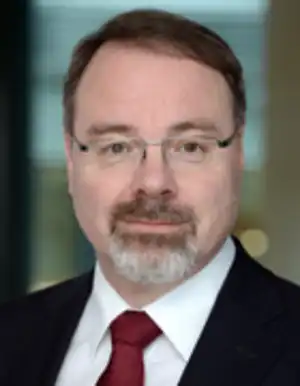
The European Commission is also convinced that science and research as a fifth freedom can drive the European economy forward. Dietmar Harhoff, however, criticises the Commission for underestimating the value of basic research in this context: “We use these terms — basic research, applied research — in political debate as well, of course. Internally, we actually know that there are large grey areas. We know that there is such a thing as Pasteur’s Quadrant, where basic research can bring potential applications within reach — I would not say they simply fall into our laps; that would be overstating it — but they become tangible.”
Pasteur’s Quadrant is a model developed by the American scientist Donald E. Stokes to break down the traditional classification of research into either basic research or quickly useful applications. There are reasons why he referred to the French co-founder of microbiology. “Because Pasteur is, of course, indisputably a basic researcher,” says Harhoff, “who wanted to investigate the foundations of infections, infectious diseases and disease, while at the same time going into French cowsheds, setting up experiments there and teaching farmers pasteurisation. Immediate practical application. And that is how this concept of Pasteur’s Quadrant came about.”
Dietmar Harhoff cites artificial intelligence as a modern example: “Geoff Hinton, Nobel laureate, was recruited directly by Google after presenting his core paper in 2012. The majority of basic research in AI is currently taking place in the private sector, at Google, Meta and others. Incidentally, that is also concerning from the perspective of democratic theory, because the direction of technological change is suddenly being co-determined by a few dazzling figures. Basic research remains important. But we must try — in the spirit of Pasteur’s Quadrant — to harness these findings and bring them into application without destroying basic research. And the Commission’s idea that we should now do only applied research runs completely counter to that.”
How significant a role basic research will actually play in the Horizon Europe package for 2027 to 2034 is also currently the subject of intensive negotiations between the Commission, the European Parliament and the Council of the European Union. One of the key interlocutors at EU level is German MEP Christian Ehler (CDU), who has been coordinator of the Committee on Industry, Research and Energy (ITRE) in the European Parliament since 2014. “In Mr Ehler, we do indeed have an advocate of academic freedom and an advocate of basic research,” says Leptin. “Someone who also makes clear how important basic research is, and who defends the doubling of the budget.” The Commission has proposed €175 billion for the package. But whether that figure will remain is still open. Ultimately, it depends on the willingness of the Member States to finance the package. “Every country has its own difficulties and has to see where cuts will be made. It is important that basic research is not cut. Ursula von der Leyen has said: the ERC should be strengthened. Music to our ears! Wonderful! Now we are looking at where the doubled funding went.”
Doubling the ERC’s budget is, for the time being, only one possibility, says its President. So far, it has not been set down in writing anywhere: “For us, a doubling is what comes through. For the EIC, the Innovation Council, it is a tripling,” says Leptin. “This once again shows the attitude: ‘We already have excellent research in Europe. The problem is just innovation. And that is where we now need to pour in more money.’”
But simply giving more money to the European Innovation Council will not be enough, Dietmar Harhoff believes. The way the EU institutions deal with the EIC also needs to change: “The EIC, compared with the ERC, shows what can happen when Parliament and the Commission always want to govern right down to the details. EIC is suffering, quite simply, because it has not been possible to switch off this monitoring, this controlling, this very finely timed, incremental supervision.”
Yet speed matters even more for the EIC — that is, in the field of innovation — than for the ERC. Because the market also responds to it. “How it is done is very, very important. How basic research, applied research, Pasteur’s Quadrant and so on are positioned,” Harhoff emphasises. “And the people who are able to make decisions — those who have the technical and scientific know-how — must be given the freedom to decide. That has been achieved at the ERC. But in organisations such as the EIC, there are still too many constraints slowing things down. We need to take the brakes off. Then we can also successfully translate science into innovation.”
Maria Leptin would also like the European Research Council to have greater autonomy: “It is important to us and to the Scientific Council that the ERC becomes even more independent. The original idea was that it would become an autonomous agency, an independent European Union body. We do not have that yet. We hope that Parliament will pursue the change that has now been proposed. Of course, we hope that the proposed near-doubling of the budget will also remain in place. The Member States are not exactly lining up to put more money into the EU’s coffers, which is a pity. So there will be cuts. Hopefully, we will be spared.”
A contribution by Claudia Neumeier