Abraham Flexner (✝︎)
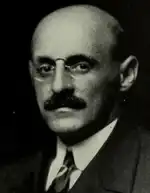
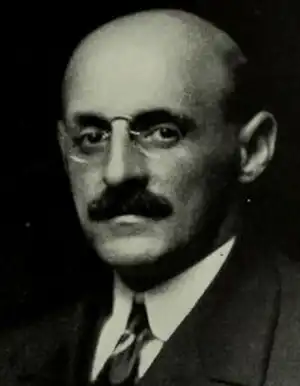
- Election year 1927
Research
He had a significant impact on the improvement of higher education in the United States and on the academic education of physicians in the United States and Canada. He served as the founding director of the Institute for Advanced Study (IAS), which was established as a private research institution in Princeton in 1930. In this capacity, Flexner successfully persuaded prominent figures to join the institute, including the renowned German physicist Albert Einstein, who was also a Member of the Leopoldina.
Person
Abraham Flexner was born on 13 November 1866 in Louisville, Kentucky as the sixth of nine children. His parents, Esther and Moritz Flexner, were a married Jewish couple who had migrated from Germany. His father was a merchant, his mother a seamstress. Abraham Flexner was raised in an Orthodox Jewish family, yet he became agnostic at a young age.
The Flexners placed a high value on education, but the financial crisis of 1873 initially diminished the parents’ hope of sending their children to college.
Thanks to the financial support of his eldest brother, Jacob, who was already married and ran a drugstore, Abraham eventually became the first member of the family to attend a secondary school and earn an academic degree. His success as an educational researcher later enabled him to fund the academic education of his younger siblings.
In 1896, Abraham Flexner married Anne Laziere Crawford, a former student of his who would later become famous in the United States as children’s book author and playwright. The couple were supporters of the women’s movement of that time and the associated fight for women’s right to vote.
Abraham and Anne Flexner Crawford had two daughters, Jean, born in 1899, and Eleanor, born in 1908. Eleanor would later become a pioneer in women’s studies. Her sister Jean worked for the Division of Labor Standards in Washington, DC.
Abraham Flexner died on 21 September 1959 in Falls Church, Virginia. He was buried at Cave Hill Cemetery in Louisville, Kentucky.
In November 1978, a street in Louisville’s hospital district was named Abraham Flexner Way in honour of the educator.
Career
Abraham Flexner attended Johns Hopkins University in Baltimore, Maryland for two years and earned a Bachelor of Arts in Classics in 1886. After being denied a scholarship for further studies, he returned to his hometown of Louisville to teach Greek and Latin at Louisville High School.
In 1890, he established a private school in Louisville. During his time as a teacher, Flexner developed a keen interest in educational issues and began to focus on enhancing school education. He implemented his own pedagogical ideas, which aimed to increase the share of practical elements in lessons and provide intensive tutoring to small groups of students.
In 1905, he enrolled at Harvard University in New Jersey and at the Humboldt-Universität zu Berlin in Germany. However, these studies did not result in any additional academic degrees.
In 1908, Flexner published his first book, entitled “The American College”, in which he expounded on his pedagogical endeavours and criticised the state of higher education at the time. This attracted the attention of the Carnegie Foundation for the Advancement of Teaching, which specialises in educational affairs. In the same year, the Foundation’s president, Henry S. Pritchett, commissioned Flexner to write a report on the state of medical education. Flexner completed this task despite not having received any medical education. Published in 1910, the “Flexner Report” led to comprehensive reforms in physician education in the United States. In addition, numerous educational institutions, particularly in rural areas, were closed, while the remaining institutions saw changes in personnel.
In 1930, Flexner became founding director of the Institute for Advanced Study (IAS) at Princeton University. The institute was founded with the help of a donation of five million dollars from Louis Bamberger, a businessman, and his sister Caroline Bamberger Fuld. The IAS was a private research institute that was not directly affiliated with the university. However, given its close proximity, it offered numerous opportunities for collaboration. It quickly rose to become one of the world’s leading centres for basic research inspired by scientific curiosity. Due to the substantial financial resources available to the institution, permanent members were always at liberty to determine the direction of their studies. The IAS thus became a model for the promotion of independent research.
Its existence also underscored the importance of academic freedom, leading to the establishment of similar institutes worldwide, including the Tata Institute of Fundamental Research in Bombay in 1936, and the Institut des hautes études scientifiques (IHÉS) near Paris in 1958.
During Abraham Flexner’s term as director, the IAS also functioned as a refuge for European academics who were persecuted by the Nazi regime in Germany. One of them was Albert Einstein (Member of the Leopoldina from 1932), who was invited to join the institute by Flexner in 1933. In the same year, the mathematician David Hilbert (Member of the Leopoldina from 1932) and the physicist and mathematician Hermann Weyl (Member of the Leopoldina from 1923) came to Princeton. Flexner also recruited John von Neumann, a Hungarian-born mathematician who had previously fled Europe and was already working at Princeton University as a visiting professor. Other renowned European researchers soon followed, including the Austrian physicist Wolfgang Pauli and the German mathematician Emmy Noether.
Honours and Memberships
Abraham Flexner received numerous awards for his scientific work, including the Frank H. Lahey Memorial Award (1956). He was also posthumously inducted to the Health Care Hall of Fame (1990). In addition, Flexner was appointed Rhodes Lecturer at the University of Oxford in the United Kingdom (1927 and 1928).
Numerous universities awarded him an Honorary Doctorate, including the Humboldt-Universität zu Berlin, Princeton University and Johns Hopkins University. Flexner was elected member of the Deutsche Akademie der Naturforscher Leopoldina (German Academy of Sciences Leopoldina) in 1927.