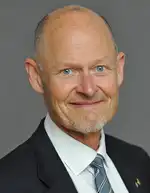
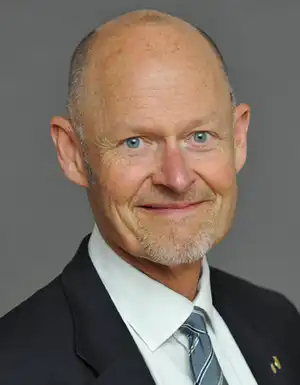
Professor Dr Bill S. Hansson
- Section Organismic and Evolutionary Biology
- Location Jena, Germany
- Election year 2017
Research
Research Priorities: Olfactory system, neuroethological chain of events, reciprocity between insects and host plants
Bill S. Hansson is a Swedish neuroethologist. He works in the field of evolutionary neuroethology, which investigates how neurobiological processes influence behaviours. He researches the evolution of olfactory functions using complete neuroethological chains of events, starting with molecules, genes and neurones, and up to reactions in the entire organism.
Bill S. Hansson and his team look at how habitat and available food resources influence the olfactory systems of arthropods. For this purpose they investigate different related species of fruit flies, with the understanding of how scents enter the brains of insects and how their smells influence their behaviour being key to such investigations. In this way he was able to prove that the olfactory system is crucial for many insects when it comes to survival and reproduction. He analysed, for example, how fruit flies and moths use scent-controlled behaviour to find food, mates, and places to lay eggs, as well as how they use scent signals to avoid enemies, pathogens and toxic environments.
Using the example of the connection between the tobacco hawk moth Manduca Sexta and the tobacco plant, Bill S. Hansson investigates in detail how the communication between insect and host plant works and how the host plant influences the moth’s olfactory function and behaviour. Thanks to its keen sense of smell the moth can find the flower even in complete darkness. When the flower is subjected to high ozone concentrations, however, the moth is not able to find its goal. This is because greenhouse gases such as ozone, nitrogen and carbon dioxide impair the pheromones transmitted between insects. Many pheromones have double bonds that are sensitive to ozone, for example, and can easily break apart. This negatively affects the insects’ communication abilities. Male fruit flies subjected to ozone even lose, for example, the ability to differentiate between male and female flies. This leads to the male flies often trying to court one another.
Bill S. Hansson is also interested in the transition from life in water to life on land for certain crab and insect species. He wants to discover how this transition influenced their olfactory structures and scent-driven behaviours.
Bill S. Hansson is a Swedish neuroethologist. He works in the field of evolutionary neuroethology, which investigates how neurobiological processes influence behaviours. He researches the evolution of olfactory functions using complete neuroethological chains of events, starting with molecules, genes and neurones, and up to reactions in the entire organism.
Bill S. Hansson and his team look at how habitat and available food resources influence the olfactory systems of arthropods. For this purpose they investigate different related species of fruit flies, with the understanding of how scents enter the brains of insects and how their smells influence their behaviour being key to such investigations. In this way he was able to prove that the olfactory system is crucial for many insects when it comes to survival and reproduction. He analysed, for example, how fruit flies and moths use scent-controlled behaviour to find food, mates, and places to lay eggs, as well as how they use scent signals to avoid enemies, pathogens and toxic environments.
Using the example of the connection between the tobacco hawk moth Manduca Sexta and the tobacco plant, Bill S. Hansson investigates in detail how the communication between insect and host plant works and how the host plant influences the moth’s olfactory function and behaviour. Thanks to its keen sense of smell the moth can find the flower even in complete darkness. When the flower is subjected to high ozone concentrations, however, the moth is not able to find its goal. This is because greenhouse gases such as ozone, nitrogen and carbon dioxide impair the pheromones transmitted between insects. Many pheromones have double bonds that are sensitive to ozone, for example, and can easily break apart. This negatively affects the insects’ communication abilities. Male fruit flies subjected to ozone even lose, for example, the ability to differentiate between male and female flies. This leads to the male flies often trying to court one another.
Bill S. Hansson is also interested in the transition from life in water to life on land for certain crab and insect species. He wants to discover how this transition influenced their olfactory structures and scent-driven behaviours.
Career
- 2011-2014 Managing Director, Max Planck Institute for Chemical Ecology, Jena, Germany
- since 2010 Honorary Professor, Friedrich Schiller University, Jena, Germany
- 2006-2016 Visiting Professor, Swedish University of Agricultural Sciences (SLU), Alnarp, Sweden
- 2003-2006 Vice-Dean, Department of Landscape Architecture, Planning and Management, SLU Alnarp, Sweden
- since 2006 Director and Scientific Member, Department of Evolutionary Neuroethology, Max Planck Institute for Chemical Ecology, Jena, Germany
- since 2000 Professor, Chemical Ecology, Lund University, Lund, Sweden
- 2001-2006 Professor and Head, Department of Plant Protection Biology, Chemical Ecology, SLU, Alnarp, Sweden
- 1995-2001 Junior Professor for Neurobiology, Lund University, Lund, Sweden
- since 1992 Adjunct Professor, Lund University, Lund, Sweden
- 1990-1995 Junior Professor, Lund University, Lund, Sweden
- 1989-1990 Postdoctoral Fellow, Arizona Research Laboratories, Division of Neurobiology, University of Arizona, Tucson, USA
- 1988 Ph.D. in Ecology, Lund University, Lund, Sweden
- 1982-1988 Degree in Biology, Lund University, Lund, Sweden
Functions
- 2014-2020 Vice-President, Max Planck Society (MPG), Munich, Germany
- since 2017 Chairperson, Advisory Board, EXTEMIT-K Programme, Czech University of Life Sciences, Prague, Czech Republic
- since 2016 Member, Board of Directors, Malopolska Centre for Biotechnology, Krakow, Poland
- 2015 Member, Committee, EU Liaison Office, German Research Foundation (DFG), Germany
- since 2014 Member, Heads of International Research Organizations (HIROs)
- 2013-2016 Chairperson, Governing Council, International Centre for Insect Physiology and Ecology, Nairobi, Kenya
- 2013-2016 Chairperson, Board of Directors, International Centre for Insect Physiology and Ecology, Nairobi, Kenya
- since 2013 Member, Appointment Committee, Group Biology of Ageing, MPG, Munich, Germany
- 2012-2013 Member, Appointment Committee Brain Research, MPG, Munich, Germany
- since 2012 Member, Commission for Improved Central Services, MPG, Munich, Germany
- since 2012 Member, Working Group for the Promotion of Female Researchers at the MPG, MPG, Berlin, Germany
- 2011-2012 Member of the Board of Directors, European Chemoreception Research Organisation (ECRO)
- 2011-2012 Member, Appointment Committee Biology of Sleep, MPG, Munich, Germany
- 2011; 2009 Member, Appointment Committee Infection Biology, MPG, Munich, Germany
- since 2009 Member, Outlook Committee, MPG, Munich, Germany
- 2008-2016 Member, Executive Board, International Centre for Insect Physiology and Ecology, Nairobi, Kenya
- 2008 Member, Appointment Committee Brain Research, MPG, Munich, Germany
- since 2006 Member, Governing Council, International Centre for Insect Physiology and Ecology, Nairobi, Kenya
- since 2006 Member, Board of Directors, International Centre for Insect Physiology and Ecology, Nairobi, Kenya
- 2005-2007 Member, Council, International Society for Chemical Ecology (ISCE)
- since 2003 Member, Editorial Board, Journal of Insect Physiology
- since 2002 Member, Board, Royal Belgian Academy of Sciences, Belgium
- 2002-2006 President, ECRO
- 2000-2008 Member, Board, ECRO
- 1999 Guest Editor, Microscopy Research and Techniques
- 1998-1999 Editor, Insect Olfaction
- 1997-2001 Member, Board, Department of Ecology, Lund University, Lund, Sweden
- since 1989 Member, Board of Directors, European Symposium on Insect Taste and Olfaction (ESITO)
- Member, Editorial Board, Journal of Insect Physiology
- Member, Editorial Board, Frontiers in Neural Circuits
Projects
- 2015-2019 Participating Scientist, Project “NanoSmells: Artificial remote-controlled odorants”, Future and Emerging Technologies (FET), Funding Framework Programme 2020, European Union (EU)
- 2014-2018 Applicant, Project “An integrative analysis of the olfactory system in terrestrial vs. marine hermit crabs”, DFG, Germany
- 2009 Project “Evolution of the arthropod olfactory system”, Volkswagen Foundation, Hanover, Germany
- 2007-2010 Participant, Project “Biosynthetic Infochemical Communication”, 6th Research Framework Programme (FP), EU
- 2007-2008 Project “Efficient and environmentally sustainable control of sorghum chafer, Pachnoda marginata, by mass trapping”, Swedish International Development Agency (Sida/SAREC), Sweden
- 2006-2016 Project “Insect chemical ecology, ethology and evolution”, Linnaeus Initiative, Netherlands
- 2002-2006 Participant, Project “A fleet of artificial chemosensing moths for distributed environmental monitoring”, FP5, EU
- 2000-2003 Project “Evolution of olfactory coding”, Marie Skłodowska-Curie Actions, FP5, EU
Honours and Memberships
- 2023 Honorary Professorship, Nanjing Agricultural University (NAU), Nanjing, China
- since 2021 Foreign Member, Chinese Academy of Sciences, China
- 2021 Cross of Merit 1st Class, Federal Republic of Germany
- since 2017 Member, German National Academy of Sciences Leopoldina, Germany
- 2017 Jubilee Medal, Finnish Academy of Science and Letters, Finland
- since 2016 Member, African Academy of Sciences
- 2016 Honorary Doctorate, Department of Landscape Architecture, Planning and Management, SLU, Alnarp, Sweden
- 2016 Ellis Island Medal of Honor, National Ethnic Coalition of Organizations (NECO), USA
- since 2014 Member, Finnish Academy of Science and Letters, Finland
- 2014 ISCE Silverstein-Simeone Lecture Award, Journal of Chemical Ecology
- 2013 AChemS Givaudan Lecture Award, Association for Chemoreception Sciences, Glenview, USA
- 2013 BingZhi Professorship of Zoology, Chinese Academy of Sciences, China
- since 2012 Member, Academia Europaea
- since 2011 Member, Royal Swedish Academy of Sciences, Sweden
- since 2011 Honorary Member, Royal Entomological Society (FRES), St Albans, UK
- since 2010 Honorary Professor, Friedrich Schiller University, Jena, Germany
- since 2010 Member, Saxon Academy of Sciences and Humanities, Leipzig, Germany
- 2009 Letterstedt Prize, Royal Swedish Academy of Sciences, Sweden
- since 2007 Member, Royal Swedish Agricultural Academy, Sweden
- 2000 International Award, Jean-Marie Delwart Foundation, Louvain-la-Neuve, Belgium
- 1998 Takasago International Research Award in Olfactory Science, Takasago International Corporation, Tokyo, Japan