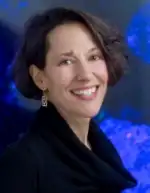
Professor Dr Brenda A. Schulman
- Section Biochemistry and Biophysics
- Location Martinsried, Germany
- Election year 2019
Research
Research priorities: Biochemistry, structural biology, post-translational modifications, ubiquitin, protein degradation, cell cycle, autophagy
Brenda A. Schulman is a biochemist, structural biologist, and cell biologist. Her lab elucidates fundamental principles underlying cellular regulation by small proteins known as ubiquitin and ubiquitin-like proteins. Because this regulation is associated with numerous diseases - including cancers, neurodegenerative disorders, and viral infections - Schulman’s research enables deciphering physiologically important signaling pathways and their roles in diseases.
Brenda Schulman elucidates biochemical pathways and structural mechanisms underlying how protein functions are dynamically switched to drive crucial biological regulatory pathways. In eukaryotes, a major form of regulation involves covalent protein modification by a diverse array of ubiquitin (UB) and ubiquitin-like proteins (UBLs). This is mediated by cascades of enzymes in classes known as E1, E2 and E3. It is estimated that the human genome encodes 500-1000 E1, E2, and E3 enzymes, rivaling the numbers of kinases. The vast numbers of these enzymes underscores their widespread roles in regulation. The foundation of Schulman’s work is a persistent drive to visualize dynamic protein complexes in their functional forms.
The Schulman lab biochemically reconstitutes intricate regulation, devises new chemical or protein-design methods for trapping transient massive multiprotein assemblies in conformations representing fleeting ubiquitylation reaction intermediates, and in conjunction with structural techniques and genetics, defines the structural mechanisms underlying UB and UBL conjugation.
Schulman’s group determined numerous structures (originally by X-ray crystallography, but more recently by cryo electron microscopy) that defined fundamental principles by which major classes of E1, E2 and E3 enzymes transfer UB and UBLs to specific targets. Schulman has also identified several previously unrecognized cellular pathways regulating ubiquitylation.
Career
- since 2018 Honorary Professor, Department of Chemistry, Technical University of Munich, Germany
- since 2017 Director and Scientific Member at the Max Planck Institute of Biochemistry (primary appointment) Martinsried, Germany
- since 2017 Adjunct Faculty, St. Jude Children’s Research Hospital, Memphis, USA
- 2016 Director, Department of Molecular Machines and Signaling, Max-Planck-Institute of Biochemistry, Martinsried/Munich, Germany (secondary appointment)
- 2005-2017 Investigator, Howard Hughes Medical Institute, Chevy Chase, USA
- 2001-2017 Faculty, St. Jude Children’s Research Hospital, Memphis, USA
- 1998-2001 Postdoctoral fellow, Memorial Sloan-Kettering Cancer Center, New York, USA (Advisor: Nikola P. Pavletich)
- 1996-1998 Postdoctoral fellow, Massachusetts General Hospital Cancer Center, Boston, USA (Advisor: Ed Harlow)
- 1989-1996 PhD in Biology, Massachusetts Institute of Technology (MIT), Cambridge, USA (Advisor: Peter S. Kim)
- 1993, 1996 Internship with Christopher M. Dobson, Oxford, UK
- 1985-1989 Bachelor’s degree in Biology, The Johns Hopkins University, Baltimore, USA
Functions
- 2019 Co-Organizer, EMBO Conference on Ubiquitin
- 2018 Scientific Review Board, Walter and Eliza Hall Institute of Medical Research, Parkville Victoria, Australia
- since 2018 Scientific Advisory Board, The HARC Center, University of California, San Francisco, USA
- 2017 Co-Organizer, EMBO Conference on Ubiquitin
- since 2016 Scientific Advisory Board, The Jane Coffin Childs memorial Fund for Medical Research, New Haven, USA
- 2016 Co-Organizer, 30th Anniversary Symposium of the Protein Society
- 2015 Co-Organizer, EMBO Conference on Ubiquitin
- since 2015 Editorial Board, Proceedings of the National Academy of Sciences
- 2013 Co-Organizer, EMBO Conference on Ubiquitin
- since 2011 Editorial Board, The Protein Science
- 2011-2016 Scientific Review Board, Starr Cancer Consortium
- 2011-2013 Nominating Committee, The Protein Society
- 2009-2013 Co-Organizer, Cold Spring Harbor meeting on The Ubiquitin Family
- 2007 Co-Organizer, Keystone Symposium on Ubiquitin and Signaling
Projects
- since 2019 Co-Principal Investigator R01CA247365 „Chemical biology of the control of neddylation by DCN1”, National Cancer Institute, National Institutes of Health (NIH), Bethesda, USA
- since 2018 Principal Investigator Nedd8Activate „How does the ubiquitin-like protein NEDD8 activate ubiquitin ligase machineries?”, European Research Council Advanced Grant
- since 2017 Subproject leader SFB 1035 “Control of protein function by conformational switching”
- 2003-2019 Principal Investigator (lab at St. Jude Children’s Research Hospital), R37GM069530 „E3-mediated Ubiquitin-Like Protein Ligation”, National Institute of General Medical Sciences (NIGMS), NIH, Bethesda, USA
- 2006-2016 Principal Investigator R01GM077053 „Structures/Mechanisms In A Noncanonical Ubiquitin-Like Protein Transfer Cascade”, NIGMS
- 2005-2017 Investigator, Howard Hughes Medical Institute
Honours and Memberships
- since 2026 Fellow, Royal Society, UK
- 2023 Louis-Jeantet Prize for Medicine of the Louis-Jeantet Foundation
- since 2019 Member, German National Academy of Sciences Leopoldina
- 2019 Gottfried Wilhelm Leibniz Prize
- 2019 Ernst Jung Prize for Medicine
- since 2018 Member, European Molecular Biology Organization (EMBO)
- 2018 ERC Advanced Grant
- 2016 Vallee Visiting Professorship Award
- 2014 MERIT Award, National Institute of general Medical Sciences
- since 2014 Member, National Academy of Sciences, USA
- since 2012 Member, American Academy of Arts and Sciences
- 2011 Dorothy Crowfoot Hodgkin Award, The Protein Society
- 2005 Investigator, Howard Hughes Medical Institute
- 2004 United States Presidential Early Career Award for Scientists and Engineers
- 2004 Beckman Young Investigator Award
- 2004 Pew Scholar in Biomedical Sciences