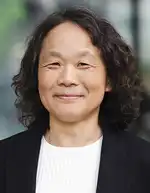
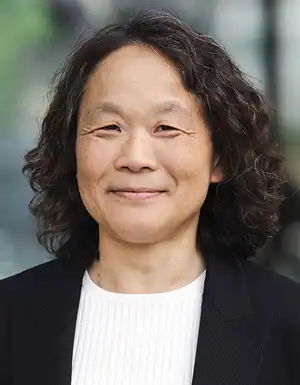
Professor Dr Elly Margaret Tanaka
- Section Genetics/Molecular Biology and Cell Biology
- Location Wien, Austria
- Election year 2024
Research
Research Priorities: Regeneration of complex body structures, molecular and cellular foundations, molecular genetics, axolotl, organoids
Elly Tanaka is an American biochemist. She studies the regeneration of complex body structures, such as the nervous system and limbs of four-legged animals, as well as their molecular and cellular foundations. Her main model organism is the regenerative salamander Ambystoma mexicanum, commonly known as the axolotl. She has honed this animal’s molecular genetics and also uses organoids in her research. The key question of her research projects seek to answer is why some species are able to regenerate while others cannot.
Elly Tanaka studies the regeneration of complex body structures, with a particular focus on the salamander, which is able to regenerate its limbs and spinal cord. Elly Tanaka managed to identify the stem cells responsible for this complex regeneration in the axolotl, as well as the signals that trigger cell growth after an injury. Using molecular genetics she managed to show, that the regeneration of limbs is based on the development of stem cells from various tissue layers, including skin, muscles, and nerves, from which the complex tissue structure of functional limbs regenerates. She also analyses neural stem cells that are involved in regenerating the spinal cord and brain. Elly Tanaka discovered that adult type neural stem cells dedifferentiate to an embryonic type neural stem cell in order to grow the new spinal cord.
Tissue cells react to amputation with a series of molecular factors from the blood and the injured epidermis, which initiates the process of cell migration and cell proliferation. In order to regenerate complex body parts such as tails and other extremities, both tissue growth and coordination of the various tissues and the entire structure are required. Elly Tanaka showed that a subpopulation of the skin, the dermis, organises the regeneration of all other tissues. These cells carry the information as to whether the regeneration concerns the cells of the upper tail or the hand.
Elly Tanaka’s research group also investigates why the regeneration process ceases to work in frogs after metamorphosis, and why in mice it only occurs in the tips of fingers and toes. They study related stem cell populations to find out whether the potential and development of stem cells between the two species is different. In particular, they investigate how differently the stem cells react to regeneration-specific signals.
On the one hand, these studies serve as the starting point for an investigation of the question of how mammals such as mice have lost the ability to regenerate during their evolutionary process. For this purpose, the working group created a three-dimensional spinal cord tissue from the embryonic stem cells of mice. On the other hand, their work aims to advance the development of new strategies to regenerate or replace mammalian tissues. To this end, they have directed human embryonic stem cells to form retinal tissues including the pigmented retinal epithelium (RPE). In turn, these cells are used to screen for potential drugs that could ameliorate defects in RPE cells that are known to cause progressive blindness.
Career
- since 2024 Scientific Director, Institute of Molecular Biotechnology (IMBA), Vienna, Austrian Academy of Sciences (OEAW), Austria
- 2016-2024 Senior Scientist, Research Institute of Molecular Pathology (IMP), Vienna BioCenter, Vienna, Austria
- 2014-2016 Director, Center for Regenerative Therapies Dresden (CRTD), Dresden University of Technology, Dresden, Germany
- since 2008 Professorship, Dresden University of Technology, Dresden, Germany
- 1999-2008 Leader, Research Group, Max Planck Institute of Molecular Cell Biology and Genetics (MPI-CBG), Dresden, Germany
- 1994-1999 Postdoctoral Fellow, Ludwig Cancer Research Institute (LICR), University College London (UCL), London, UK
- 1993 PhD in Biochemistry, University of California San Francisco (UCSF), San Francisco, USA
- 1987 BA in Biochemistry, Harvard University, Boston, USA
Functions
- Member and President, International Society of Regenerative Biology (ISRB)
- Member and Member, Board of Directors, International Society for Stem Cell Research (ISSCR)
- Member, Society of Developmental Biology (GfE), Heidelberg, Germany
- Member, German Stem Cell Network (GSCN)
- Member, Editorial Board, Development Cell
Projects
- since 2024 Principal Investigator and Coordinator, Synergy Grant “Mapping the axolotl brain and its regeneration – AxoBrain”, European Research Council (ERC)
- since 2023 Principal Investigator, Subproject “Identifying epigenetic regulators of regeneration gene expression”, Grant “REGENERATE-IT – Learning from animals how to regenerate: multidisciplinary training programme in regenerative biology”, Marie Skłodowska-Curie Actions – Doctoral Networks (MSCA-DN), European Union (EU)
- 2019 Member, Scientific Team, Grant “REANIMA: Regenerative medicine: from new insights to new applications”, Horizon 2020, EU
- 2018-2023 Principal Investigator, Advanced Grant “Understanding the evolution of regeneration-permissive gene expression and positional memory in Axolotl limb regeneration – RegGeneMems”, ERC
Honours and Memberships
- since 2026 Fellow, Royal Society, UK
- 2025 FWF Wittgenstein Award, Austrian Science Fund FWF, Austria
- 2025 Schleiden Medal, German National Academy of Sciences Leopoldina, Germany
- since 2024 Member, German National Academy of Sciences Leopoldina, Germany
- 2023 Member, National Academy of Sciences (NAS), USA
- 2022 Full Member, OEAW, Austria
- 2020 FEBS | EMBO Women in Science Award, European Molecular Biology Organization (EMBO)
- 2018 Erwin Schrödinger Prize, OEAW, Austria
- 2017 Member, EMBO
- 2017 Ernst Schering Prize, Schering Foundation, Berlin, Germany
- 2015 Member, Academia Europaea
- 2013-2017 Member, Max Planck Society for the Advancement of Science, Munich, Germany
- 2003 BioFuture Research Prize, Federal Ministry of Education and Research (BMBF), Germany