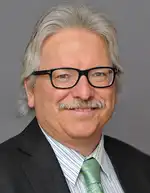
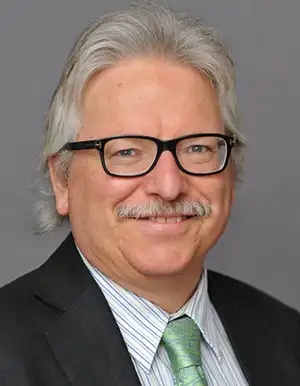
Professor Dr Günther Gustav Hasinger
- Section Physics
- Location Honolulu, Hawaii, United States
- Election year 2011
Research
Research Priorities: Black holes, galaxy cores, cosmic background X-radiation
Günther Hasinger is an astrophysicist. He uses x-ray astronomy to research the formation and development of black holes and active galaxy cores as well as their effects on cosmic background X-radiation. He thus investigates fundamental questions about the development of the universe and makes important contributions to the understanding of the role of black holes in galaxy formation.
Günther Hasinger’s work has led to major breakthroughs in the understanding of cosmic background X-radiation. Using measurements from the ROSAT satellite he has shown that this radiation comes from high-mass active black holes at the centre of distant galaxies. His research established black holes as nuclei in the development of galaxies.
Alongside his research, Günther Hasinger has also played a key role in developing x-ray observatories such as eROSITA and ATHENA. His involvement with the ROSAT satellite was particularly valuable: together with industry and research partners he successfully replaced the failed position control system, which enabled the satellite to complete a long and successful mission. His work at modern x-ray observatories paved the way for new insights in high-energy astrophysics.
Günther Hasinger is also involved in research policy committees at the national and international level. In this way his work has benefited, among other things, basic space research in Germany and Europe. In 2024, as the designated founding director of the German Center for Astrophysics (DZA), he helped establish the research centre as a centre for digitalisation that combines the data streams of astronomical observatories around the world, and as a centre for cutting-edge technologies in close cooperation with industry and technology centres in Saxony and worldwide.
Günther Hasinger is an astrophysicist. He uses x-ray astronomy to research the formation and development of black holes and active galaxy cores as well as their effects on cosmic background X-radiation. He thus investigates fundamental questions about the development of the universe and makes important contributions to the understanding of the role of black holes in galaxy formation.
Günther Hasinger’s work has led to major breakthroughs in the understanding of cosmic background X-radiation. Using measurements from the ROSAT satellite he has shown that this radiation comes from high-mass active black holes at the centre of distant galaxies. His research established black holes as nuclei in the development of galaxies.
Alongside his research, Günther Hasinger has also played a key role in developing x-ray observatories such as eROSITA and ATHENA. His involvement with the ROSAT satellite was particularly valuable: together with industry and research partners he successfully replaced the failed position control system, which enabled the satellite to complete a long and successful mission. His work at modern x-ray observatories paved the way for new insights in high-energy astrophysics.
Günther Hasinger is also involved in research policy committees at the national and international level. In this way his work has benefited, among other things, basic space research in Germany and Europe. In 2024, as the designated founding director of the German Center for Astrophysics (DZA), he helped establish the research centre as a centre for digitalisation that combines the data streams of astronomical observatories around the world, and as a centre for cutting-edge technologies in close cooperation with industry and technology centres in Saxony and worldwide.
Career
- since 2024 Designated Founding Director, German Center for Astrophysics, Görlitz, Germany
- since 2023 Professor of Astrophysics, Dresden University of Technology, Dresden, Germany
- 2018-2024 Director of Science, European Space Agency (ESA)
- 2011-2017 Director, Institute for Astronomy (IfA), University of Hawaiʻi, Manoa, USA
- 2008-2011 Scientific Director, Max Planck Institute for Plasma Physics (IPP), Garching, Germany
- since 2003 Honorary Professor, Technical University of Munich, Munich, Germany
- 2001-2008 Head, X-ray and Gamma Group, and Director, Max Planck Institute for Extraterrestrial Physics, Garching, Germany
- 1995 Habilitation, Ludwigs-Maximilians-Universität (LMU) Munich, Munich, Germany
- 1994-2001 Professor, University of Potsdam, and Director, Astrophysics Institute Potsdam, Potsdam, Germany
- 1984 PhD in Astrophysics, Max Planck Institute for Extraterrestrial Physics, and LMU Munich, Munich, Germany
- 1980 Diploma in Physics, LMU Munich, Munich, Germany
Functions
- since 2023 Member, Forum #Zukunftsstrategie, Federal Ministry of Education and Research (BMBF), Germany
- 2013 Chairperson, Review Board Programme-Oriented Funding (PoF) III Space Travel, Helmholtz Association of German Research Centres, Germany
- since 2013 Member, Board of Directors, Keck Observatory, Kamuela, USA
- since 2012 Vice-Chairperson, Board of Directors, AURA Observatory, La Serena, Chile
- 2010-2011 Member, Scientific Commission of Lower Saxony, Lower Saxony, Germany
- 2009-2011 Member, High Level Policy Advisory Committee (HISPAC), ESA
- 2009-2011 Chairperson, Steering Committee, European Fusion Development Agreement (EFDA)
- 2008-2010 Secretary and Member, Board, Berlin-Brandenburg Academy of Sciences and Humanities, Berlin, Germany
- 2007-2008 Member, Review Board Astrophysics, BMBF, Germany
- 2007 Chairperson, Visiting Committee, European Southern Observatory (ESO)
- 2006-2009 President, Division XI: Space, International Astronomical Union
- 2004-2006 Chairperson, Council of German Observatories, Germany
- 1996-2008 Member, National Committee (Germany), Committee on Space Research (COSPAR), Paris, France
- 1994-2000 Deputy Chairperson, Review Board Astrophysics, BMBF, Germany
Projects
- since 2006 Member, Cosmic Evolution Survey (COSMOS), California Institute of Technology, Pasadena, USA
Honours and Memberships
- 2012 Professor Luigi Tartufari International Prize, Accademia Nazionale dei Lincei, Rome, Italy
- since 2011 Member, German National Academy of Sciences Leopoldina, Germany
- since 2011 Corresponding Member Abroad, Austrian Academy of Sciences, Austria
- since 2011 Member, Academia Europaea
- 2011 Wilhelm Foerster Prize, URANIA Association “Wilhelm Foerster” Potsdam, Potsdam, Germany
- 2010 Award for outstanding contributions to space science, COSPAR
- 2008 Award Winner, Science Book of the Year (“Das Schicksal des Universums” (“The Fate of the Universe”)), Bild der Wissenschaft, Konradin Medien GmbH, Leinfelden-Echterdingen, Germany
- 2005 Gottfried Wilhelm Leibniz Prize, DFG, Germany
- since 2002 Associate Member, Berlin-Brandenburg Academy of Sciences and Humanities, Berlin, Germany