Professor Dr Ole Holger Petersen
- Section Physiology and Pharmacology/Toxicology
- Location Cardiff, United Kingdom
- Election year 2010
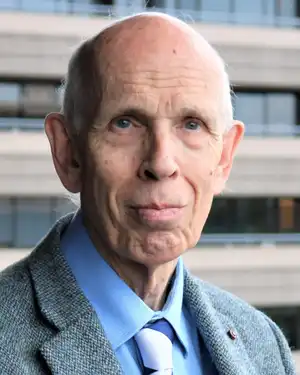
Research
Research Priorities: Pathophysiology of alcohol-related pancreatitis, intracellular calcium tunnels, IP₃ receptors, CRAC channel blockers as potential therapeutic treatment
Ole Petersen is a Danish-British physician and physiologist who researches the molecular foundations of the function and malfunction of the pancreas. Using electrophysiological methods, live-cell imaging, and high-resolution electron microscopy, he studies how energy production, enzyme secretion, and cell protection are interlinked and why this finely balanced system collapses in the case of disorders such as alcohol-related pancreatitis.
Early on, using patch clamp measurements, Peterson managed to show that certain ion channels are directly regulated by local calcium signals and form the basis of coordinated enzyme secretion. The calcium ions pass through a channel or tunnel within the cell and reach certain target areas without being immediately distributed throughout the entire cytosol. Under normal physiological conditions short, exactly localised calcium spikes arise, which initiate granule exocytosis. There, mitochondria buffer part of the calcium and at the same time increase their ATP production, an energy boost that fuels secretion.
Under pathological conditions, however, for example under the influence of alcohol metabolites, this architecture is destroyed. A central mechanism is the excessive activation of IP₃ receptors, to which the signal molecule inositol 1,4,5-trisphosphate (IP₃) binds. This leads to a continuous outflow of calcium ions from the endoplasmic reticulum. Consequently, the calcium tunnels lose their spatial precision, the signals spread in an uncontrolled manner throughout the entire cytosol, and intracellular vacuoles fill with calcium. There, trypsinogen is prematurely activated into trypsin, which initiates autodigestive tissue damage, as is characteristic for alcoholic pancreatitis.
In recent review studies, Ole Petersen describes in detail how sustained calcium overload destabilises mitochondrial homeostasis. An excessive intake of calcium ions results in the opening of transition pores in the inner mitochondrial membrane, the collapse of the membrane, and the abrupt end of ATP synthesis. The resulting energy deficiency exacerbates the dysregulation and leads to necrotic cell death. A self-reinforcing cycle arises, which significantly determines the severity of acute pancreatitis.
CRAC channels (calcium release-activated channels) play a key role in this. They open when the intracellular calcium reservoirs are exhausted, and in pathology contribute considerably to sustained calcium overload. Using animal models, Ole Petersen has managed to show that pharmacologically blocking these channels curbs the pathological calcium dynamics and protects cells from necrosis. This makes CRAC channel inhibition a highly promising therapeutic approach for treating acute pancreatitis. In addition, Petersen investigates the role of calmodulin, the stabilisation of which protects further sensitive control points.
The basic researcher stresses how precise spatial and temporal signal patterns influence the function of the pancreas. By combining high-resolution imaging with biophysical measuring techniques, his work shows that the health and sickness of the organ are based on the same signal architecture, except that in the case of illness synchronicity, locality, and energetics lose their equilibrium.
Ole Petersen’s research combines biophysical precision with major pathophysiological relevance. It has played an important role in helping us to understand the central mechanisms of pancreatic diseases and to pave the way for new therapeutic strategies.
Career
- since 2017 Professor of Physiology, Cardiff School of Biosciences, Cardiff University, Cardiff, UK
- 2010-2017 Medical Research Council Professor, Cardiff School of Biosciences, Cardiff University, Cardiff, UK
- 2010-2015 Director, Cardiff School of Biosciences, Cardiff University, Cardiff, UK
- 1998-2009 Medical Research Council Professor, University of Liverpool, Liverpool, UK
- 1981-2009 George Holt Professor of Physiology, University of Liverpool, Liverpool, UK
- 1981-1998 Chairperson, Department of Physiology, University of Liverpool, Liverpool, UK
- 1975-1981 Symers Professor of Physiology, University of Dundee, Dundee, UK
- 1972 Habilitation, University of Copenhagen, Copenhagen, Denmark
- 1969 Doctorate, University of Copenhagen, Copenhagen, Denmark
- 1961-1969 Degree in Human Medicine, University of Copenhagen, Copenhagen, Denmark
Functions
- 2024-2026 Chairperson, Physiology-Neuroscience Panel, Hungarian Research Council, Hungary
- 2019-2024 Editor-in-Chief, FUNCTION (American Physiological Society)
- since 2019 Member, Translational Medicine Working Group, Academia Europaea
- 2016-2023 Member, Board, Science Advice for Policy by European Academies (SAPEA), Scientific Advice Mechanism (SAM), European Commission (EC)
- 2016-2019 Member, Committee for Anatomy, Physiology and Neuroscience, Royal Society, UK
- 2015-2023 Vice-President, Academia Europaea
- 2013-2018 Representative of the Royal Society, European Academies Science Advisory Council (EASAC)
- 2010-2015 Chairperson, Biological Sciences Sub-Panel Research Excellence Framework (REF) 2014, Higher Education Funding Council, UK
- Member, Main Panel A, REF, Higher Education Funding Council, UK
- 2010-2019 Member, Science Advisory Council for Wales, Welsh Government, UK
- 2008-2011 Chairperson, Starting Grant Panel for Physiology, Pathophysiology and Endocrinology, European Research Council (ERC)
- 2006-2008 President, Physiological Society, UK
- 2005-2006 Vice-President, Royal Society, UK
- 2004-2006 Member, Council, Royal Society, UK
- 1995-2014 Chairperson, Nominations Sub-Committee, Academia Europaea
Honours and Memberships
- 2025 Elected Distinguished Honorary Professor, Al-Ahliyya Amman University, Amman, Jordan
- 2023 Plenary Keynote Lecture, First Kolkata Pancreas Congress, Kolkata, India
- 2022 George E Palade Prize and Medal, International Association of Pancreatology
- 2020 Academia Europaea Gold Medal, Academia Europaea
- 2018 Walter B. Cannon Award Lectureship, American Physiological Society, USA
- since 2017 Honorary Member, German Society for Gastroenterology, Digestive and Metabolic Diseases (DGVS), Germany
- since 2015 Honorary Member, Physiological Society, UK
- 2013 Horace W Davenport Distinguished Lectureship, Federation of American Societies for Experimental Biology (FASEB), Boston, USA
- 2013 Honorary President and Keynote Lecturer, 37th International Congress of Physiological Sciences, International Union of Physiological Sciences (IUPS)
- since 2010 Member, German National Academy of Sciences Leopoldina, Germany
- 2010 Lifetime Achievement Award, European Pancreatic Club (EPC)
- 2008 Commander of the Order of the British Empire (CBE), UK
- since 2004 Honorary Member, Hungarian Academy of Sciences, Hungary
- 2003 Jan Evangelista Purkyne Honorary Medal for Merit in the Biological Sciences, Academy of Sciences of the Czech Republic, Czech Republic
- since 2001 Honorary Fellow, Royal College of Physicians London (FRCP), London, UK
- since 2000 Fellow, Royal Society, UK
- since 1998 Fellow, Academy of Medical Sciences, London, UK
- 1994 Novo Nordisk Foundation’s H.C. Jacobaeus Prize and Lectureship, Novo Nordisk Foundation, Hellerup, Denmark, and Royal Danish Academy of Sciences and Letters, Copenhagen, Denmark
- 1993 ISI Citation Classic “Calcium-activated potassium channels and their role in secretion”, published in Nature 307, 693–696 (1984), Institute for Science Information (ISI), Philadelphia, USA
- since 1988 Foreign Member, Royal Danish Academy of Sciences & Letters, Denmark
- since 1988 Member, Academia Europaea