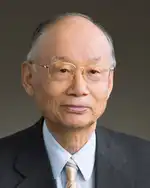
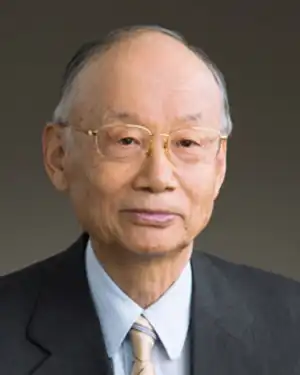
Professor Dr Dr Satoshi Ōmura
Nobel Prize for Physiology or Medicine 2015
- Section Microbiology and Immunology
- Location Tokio, Japan
- Election year 1992
Research
Research Priorities: Natural products research, drug development, antiparasitics, antibiotics, structure-effect relationships
Satoshi Ōmura is a Japanese chemist and pharmacologist who has decisively shaped the development of modern drugs. By isolating almost 500 organic substances and discovering avermectin he created the foundations for multiple medicinal innovations. Avermectin, which was later further developed into ivermectin, is now used worldwide to combat river blindness and lymphatic filariasis.
In the 1970s Ōmura and the US pharmacologist Max Tishler began to investigate the medicinal potential of soil micro-organisms. He isolated Streptomyces avermitilis, a microorganism that produces avermectin, from soil samples. Microbiologist William C. Campbell optimised the substance to become ivermectin, which has been used against parasites since 1981. Treating animals with ivermectin improves their health and also reduces the frequency of human filariasis, a disease that causes disfiguring swelling of the lymphatic system. Satoshi Ōmura and William C. Campbell received the Nobel Prize for Physiology or Medicine in 2015 for their work, which contributed to the almost complete elimination of river blindness.
Satoshi Ōmura also researched the potential of other bioactive substances. A significant discovery was cerulenin, an inhibitor of fatty-acid biosynthesis. This discovery instigated the development of statins, which are used worldwide to lower high cholesterol. Likewise pioneering was staurosporin, a protein kinase-C-inhibitor that revolutionised cancer research and facilitated tumour therapeutics such as imatinib. Imatinib represented the first successful targeted treatment for chronic myelogenous leukemia.
Satoshi Ōmura also identified lactacystin, a proteasome inhibitor, that led to the development of the drug Myelom. The proteasome is an enzyme that breaks down intracellular proteins and is part of cell cycle regulation. Disruptions to the cell cycle are an important factor in the development of cancer which means that the use of bortezomib makes the intracellular breakdown of harmful proteins possible again. His research on natural products also resulted in Herbimycin, a Hsp90 inhibitor, that inhibits the oncogenic activity of the heat shock protein Hsp90. Both substances reflect Satoshi Ōmura’s profound influence on oncology.
In the course of his career the chemist and pharmacologist discovered 13 new types of microorganisms, including Kitasatosporia, Longispora and Arbophoma, as well as 42 new species. Many of these organisms are sources for pharmaceutically usable substances whose therapeutic potential has not yet been completely exhausted.
Satoshi Ōmura’s visionary research has expanded the horizons of biotechnology. His discoveries influence not only the development of modern drugs but also deliver significant impetus for future research and the creation of innovative therapies. In addition to the Nobel Prize the scientist has also been honoured with many other renowned national and international awards for his extraordinary achievements.
Career
- since 2013 Distinguished Professor Emeritus, Kitasato University, Tokyo, Japan
- 2008-2012 President Emeritus, Kitasato Institute, Kitasato University, Tokyo, Japan
- since 2007 President, Joshibi University of Art and Design, Tokyo, Japan
- since 2007 Professor Emeritus, Kitasato University, Tokyo, Japan
- since 2005 Max Tishler Professor of Chemistry (Emeritus), Wesleyan University, Middletown, USA
- 2002-2007 Professor, Graduate School of Infection Control Sciences, Kitasato University, Tokyo, Japan
- since 2001 Special Coordinator, Drug Discovery Project from Natural Products, Kitasato Institute for Life Sciences, Kitasato University, Tokyo, Japan
- 2001-2007 Professor, Kitasato Institute for Life Sciences, Kitasato University, Tokyo, Japan
- 1991-2001 Special Visiting Professor, Tokyo University of Science, Shinjuku-ku, Japan
- 1990-2008 Director and President, Kitasato Institute, Kitasato University, Tokyo, Japan
- 1985-2003 Director, Kitasato University, Tokyo, Japan
- 1984-1990 Director and Executive Vice-President, Kitasato Institute, Kitasato University, Tokyo, Japan
- 1981-1984 Inspector, Kitasato Institute, Tokyo, Japan
- 1975-1984 Professor, School of Pharmaceutical Sciences, Kitasato University, Tokyo, Japan
- 1971-1973 Visiting Professor for Research, Wesleyan University, Middletown, USA
- 1971-2001 Senior Scientist, Research Center for Biological Function and Sensory Information, Japan Advanced Institute of Science and Technology, Nomi, Japan
- 1968-1975 Adjunct Professor, Kitasato University, Tokyo, Japan
- 1970 PhD in Chemistry, Tokyo University of Science, Tokyo, Japan
- 1968 PhD in Pharmacy, University of Tokyo, Tokyo, Japan
- 1965-1971 Scientist, Kitasato Institute, Kitasato University, Tokyo, Japan
- 1963-1965 Research Associate, University of Yamanashi, Kofu, Japan
- 1963 Degree in Chemistry, Tokyo University of Science, Tokyo, Japan
Functions
- since 2004 Editor, Journal of Antibiotics
- 1973-2004 Associate Editor, Journal of Antibiotics
Honours and Memberships
- 2018 Honorary Doctorate, University of St. Andrews, St. Andrews, UK
- since 2016 Member, Japan Society of Chemotherapy, Japan
- since 2016 Member, Japan Society of Synthetic Organic Chemistry, Japan
- since 2016 Member, Japan Pharmaceutical Association, Japan
- 2015 Nobel Prize in Physiology or Medicine (jointly with William C. Campbell and Tu Youyou), Nobel Assembly at Karolinska Institutet, Stockholm, Sweden
- 2015 Order of Cultural Merit, Japan
- since 2014 Member, Pharmaceutical Society of Japan
- 2014 Canada Gairdner Global Health Award, Les Prix Canada Gairdner Awards, Gairdner Foundation, Toronto, Canada
- 2013 Norman R. Farnsworth ASP Research Achievement Award, American Society of Pharmacognosy, USA
- 2012 Person of Cultural Merit, Japan
- 2011 Order of the Sacred Treasure, Gold and Silver Star, Japan
- 2011 Arima Award, International Union of Microbiological Societies
- 2010 Tetrahedron Prize for Creativity in Organic Chemistry or Bioorganic and Medicinal Chemistry, Tetrahydron Publications, Elsevier
- since 2005 Foreign Member, Chinese Academy of Engineering, China
- since 2005 Member, European Academy of Sciences
- since 2005 Member, Royal Society of Chemistry, UK
- 2005 Ernest Guenther Award in the Chemistry of Natural Products, American Chemical Society, USA
- since 2004 Member, Russian Academy of Sciences, Russia
- since 2002 Foreign Member, Académie des Sciences, France
- since 2001 Member, Japan Academy, Japan
- since 2001 Honorary Citizen, Nirasaki, Japan
- since 1999 Foreign Member, National Academy of Sciences, USA
- 1998 Prince Mahidol Award, Prince Mahidol Award Foundation, Bangkok, Thailand
- 1997 Robert Koch Medal, Robert Koch Foundation, Berlin, Germany
- 1995 Fujihara Award, Fujihara Foundation of Science, Tokyo, Japan
- since 1994 Honorary Member, Robert Koch Institute, Berlin, Germany
- 1994 Honorary Doctorate, Wesleyan University, Middletown, USA
- since 1992 Member, German National Academy of Sciences Leopoldina, Germany
- since 1992 Member, American Academy of Microbiology, USA
- 1992 Chevalier de L’Ordre National du Mérite, Grande Chancellerie de la Légion D’Honneur, France
- 1991 Honorary Doctorate, Lajos Kossuth University, Debrecen, Hungary
- 1989 Uehara Prize, Uehara Memorial Foundation, Tokyo, Japan
- since 1986 Member, New York Academy of Sciences, New York City, USA