News “What Happens in the Arctic Does Not Stay in the Arctic”

  • Climate Change
  • Climate Protection
Iceberg and ice from glacier in arctic nature landscape in Ilulissat,Greenland. Aerial drone photo of icebergs in Ilulissat icefjord. Affected by climate change and global warming.
“The Global Arctic: Unprecedented Change, Global Stakes” is the title of a recent statement by the science academies of Japan, Italy, Canada, France, the United States, the United Kingdom and Germany. Its focus is on climate research, climate action and adaptation strategies, which this year’s G7 summit is set to address. It is not the first time that researchers have urged policymakers to consider the global climate system as a whole. Why they are doing so again now is explained by Thomas Stocker, who was involved in the statement as Lead Scientist for the German National Academy of Sciences Leopoldina.

Profound changes are being observed in the Arctic. Over the past four decades, the far northern region has warmed almost four times faster than the global average. Since the beginning of industrialisation, average temperatures in some parts of the Arctic have risen by 5 degrees Celsius, according to the German Environment Agency. The reason for this accelerated change lies in specific feedback effects: this “Arctic amplification” is both the result and the driving force behind a series of interconnected processes. Permafrost soils are thawing and releasing gases such as carbon dioxide and methane, which affect the climate; as thawing progresses, coastlines crumble and collapse. More frequent droughts are leading to more large-scale forest fires, which also release climate-relevant gases. On land and at sea alike, both the biogeochemical and the ecological balance are being severely disrupted.

These changes are not confined to the Arctic itself. “The Arctic is a hub for numerous climatic processes of global importance,” explains geoscientist and climate physicist Thomas Stocker. The Arctic is the source of northern deep water, it acts through sea-ice cover as a “cooling system” far beyond the region itself, and with increasing warming it is a potential source of additional greenhouse gas emissions. Stocker emphasises: “What happens in the Arctic does not stay in the Arctic.”

The statement by the seven science academies paints a clear picture of the far-reaching consequences: the accelerated melting of the Greenland ice sheet will contribute to a faster rise in sea levels and thereby threaten low-lying coastal regions worldwide. Warming in the Arctic could also alter ocean currents, which would then redistribute ocean heat differently around the globe, with consequences for weather and regional climate patterns.
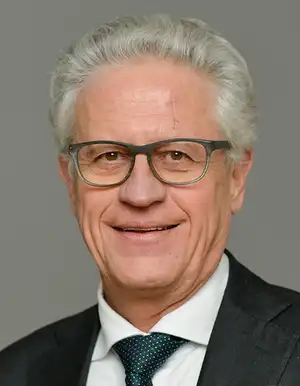
The Arctic is a hub for numerous climatic processes of global importance."

Professor Dr Thomas F. Stocker

Expert on the topic Professor Dr Thomas F. Stocker ▸

  • Earth Sciences
  • Election year 2019

The scientists involved therefore recommend a rapid reduction in greenhouse gas emissions in line with international climate targets, especially the Paris Agreement. Secondly, they call for closer international scientific cooperation, including through mission-oriented research, open databases and long-term supraregional observation projects. They also urge intensified research into tipping systems, high-risk events and systemic risks in the Arctic.

In addition, they now recommend promoting evidence-based adaptation strategies to climate change; suitable measures include early warning systems. Adaptation strategies cannot replace the necessary climate action strategies, says Stocker, but the issue has become more urgent: “The trend is, of course, increasingly evident. Especially in recent years, the consequences of global warming have become clearly noticeable all over the world.” This is particularly true for populations in the Arctic littoral states, whose livelihoods have in some cases been drastically altered by damage to infrastructure. This affects settlements and various industries alike, because supply chains, transport routes and energy systems are impacted.

Indigenous populations in the Arctic maintain traditional hunting and fishing practices, but these are becoming increasingly difficult to pursue because of unstable ice conditions. Their knowledge of Arctic conditions and of current changes is as unique as it is valuable. “On the basis of experience gathered over thousands of years, an enormous body of knowledge exists, but it is not systematically available. Individual states have a responsibility to consolidate and make use of this knowledge,” says Thomas Stocker. In their statement for the G7 summit, the academies recommend integrating Indigenous and local knowledge into international policy and environmental decision-making.

According to Thomas Stocker, the choice of the Arctic as an advisory topic is due to France’s role as guest country: “It is a consequence of France’s special commitment last year in the International Year of Glacier Preservation and in the UN Decade on Action in Cryospheric Sciences.” Despite differing political discourses in the seven participating countries, the statement contains clear messages, including a commitment to the Paris climate goals.

Other formulations may sound comparatively diplomatic. Stocker explains that this is due to the effort to produce a joint statement on the issue: “This is an iterative process coordinated by the academies of the seven countries. Some academies would have liked to include stronger wording concerning possible attempts at geoengineering in the Arctic, but here there was only minimal consensus. The result is therefore more of a compromise than an ‘action document’.” Nevertheless, the core message—and the reason for again recommending the issue to the heads of state and government at a G7 summit—remains clear: the science academies write that the future of the Arctic and of the global climate depends on decisive action being taken now. Protecting the Arctic is not merely a regional task, but one of global importance.

The Leopoldina uses cookies

We use cookies on our website. Some of them are necessary (functional cookies), while others are not necessary but help us to improve our online offering and operate it economically.

You can consent to the use of non-essential cookies by clicking on the "Accept all" button or by clicking on individual settings and agreeing to them by clicking on "Accept selection".

You can access these settings at any time and deselect cookies at a later date.

Functional

These cookies are technically necessary in order to provide the following core functionalities of the website:

  • Display of the website
  • Anonymisation of IP addresses within log files
  • Status cookie consent
Comfort

In addition to necessary cookies, we also use cookies to make your use of the website more pleasant. If you accept these cookies, external media will be loaded without your further consent.

Tracking

With the help of statistics cookies, we can better customise the content and services of our website to your interests and needs. For statistics and analyses, we use the product Matomo for statistics and analyses.

External link warning

Die Nutzung dieses Teildienstes erfordert ihre Einwilligung in die Verarbeitung zusätzlicher personenbezogener Daten durch einen selbständigen Verantwortlichen: Matterport Inc., 352 E. Java Drive, Sunnyvale, CA 94089, USA. Es gelten folgende Datenschutzhinweise: https://matterport.com/de/node/44. Mit der Einwilligung durch Klick auf „Ok“ kann auch eine Übermittlung von personenbezogenen Daten in ein Land außerhalb der Europäischen Union erfolgen. Die Einwilligung ist freiwillig. Eine Ablehnung führt zu keinen Nachteilen. Eine erteilte Einwilligung kann jederzeit mit Wirkung für die Zukunft widerrufen werden.

Ich bin damit einverstanden, dass bei Nutzung dieses Teildienstes zusätzliche personenbezogene Daten verarbeitet werden. Dabei verarbeitete Datenkategorien: technische Verbindungsdaten des Serverzugriffs (IP-Adresse, Datum, Uhrzeit, abgefragte Seite, Browser-Informationen), Daten zur Erstellung von Nutzungsstatistiken und Daten über die Nutzung der Website sowie die Protokollierung von Klicks auf einzelne Elemente. Zweck der Verarbeitung: Auslieferung von Inhalten, die von Dritten bereitgestellt werden. Rechtsgrundlage für die Verarbeitung: Ihre Einwilligung nach Art. 6 (1) a DSGVO, Art. 49 DSGVO. Verantwortlicher für die Datenverarbeitung Matterport Inc., 352 E. Java Drive, Sunnyvale, CA 94089, USA. Es gilt die Datenschutzerklärung von Matterport Inc.: https://matterport.com/de/node/44.

Visit page ▸