Climate, biodiversity, raw materials: For an integrated use of mires and floodplains
Fossil fuels are usually the center of public debate on causes of human-made climate change. However, in order to reach Germany’s emission targets, more attention must be paid to greenhouse gases arising from land-use change. The emissions from mires and floodplains threaten to increase further in the coming years.
Last edited: 16. March 2026
Organic soils, including mires and grasslands growing on former mires, play an important role in the climate system, with mires storing more carbon worldwide than forestland. And in Germany, too, mires are the largest carbon stores, despite covering only five percent of the country’s landscape. Draining mires and cutting off of the floodplains from river courses makes soils drier, which means that air enters the soil and accelerates the natural decomposition of plant mass. As a result, large amounts of greenhouse gases enter the atmosphere. It is estimated that over seven percent of all German greenhouse gas emissions originate from mires.
“Mire protection is in the public interest.” This statement in the German Federal Government’s coalition agreement could pave the way for a climate- and bio-diversity-friendly use of mires and wet grasslands. But how can wet grasslands be used? How large is the carbon storage potential of floodplains? How will climate change influence future water availability? The working group seeks answers to these questions and will work on a statement and an accompanying digital dossier.
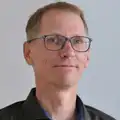
Spokesperson of the working group

Further members of the working group
- Prof Dr Daniel Hering, University of Duisburg-Essen, Department of Aquatic Ecology
- Prof Dr Johannes Kollmann, TU Munich, Chair of Renaturation Ecology
- Prof. Dr Jürgen Kreyling, University of Greifswald, Chair of Experimental Plant Ecology
- Prof Dr Hermine Mitter, University of Natural Resources and Life Sciences, Vienna
- Dr Stefan Möckel, Helmholtz Centre for Environmental Research, Leipzig
- Prof. Dr Annette Prochnow, Leibniz Institute for Agricultural Engineering and Bioeconomy, Potsdam
- Prof Dr Ortwin Renn ML, IASS Potsdam
- Dr Franziska Tanneberger, University of Greifswald & Greifswald Mire Centre
- Prof Dr Dörthe Tetzlaff, Leibniz Institute of Freshwater Ecology and Inland Fisheries, Berlin
- Prof Dr Florian Ziel, University of Duisburg-Essen
ML = Member of the Leopoldina
-
Kontakt Dr. Henning Steinicke
Deputy Head, Department Science – Policy – Society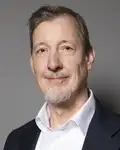
-
Kontakt Dr. Christian Anton
Scientific Officer, Department Science - Policy - Society