Discoveries
Eugen Seibold's estate is now available in the Leopoldina archive and offers comprehensive insights into his scientific work and his life.
Last edited: 05. December 2025

Display case in the Leopoldina Archive | above: Medal of the University of Kyōto Awarded to Eugen Seibold on 5 March 1986 - bronze, embossed; below: War diary of Eugen Seibold (1940-1941); right: Expedition photo albums - research vessel Meteor I (1964/1965), photo documentation of a scientific expedition through the Indian Ocean and the Persian Gulf.
Biography of Eugen Seibold
More on Eugen Seibold Professor Dr Eugen Seibold ▸
- Earth Sciences
- Election year 1971
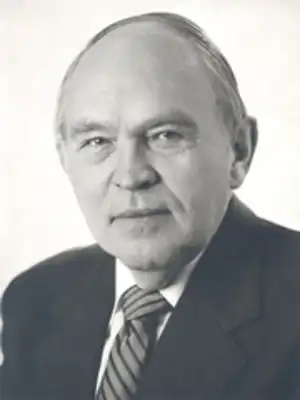
Eugen Seibold was born in Stuttgart on 11 May 1918. After attending the Wilhelms-Oberrealschule and completing his military service, he studied geosciences at the universities of Bonn and Tübingen. He received his doctorate in Tübingen in 1948 and qualified as a professor there in 1952. He then taught as a lecturer at the Technical University of Karlsruhe before taking up a professorship at the University of Tübingen in 1954.
In 1958, Seibold moved to the Christian-Albrechts-Universität in Kiel, where he was director of the Geological-Palaeontological Institute and Museum. From 1965, he specialised in marine geology and carried out numerous expeditions on the research vessels Meteor, Valdivia and Glomar Challenger. His research trips took him to the North and Baltic Seas, the Indian and Atlantic Oceans and the Persian Gulf. He investigated sedimentology, geochemistry, tectonics, hydrogeology and micropalaeontology.
From 1980 to 1985, Eugen Seibold was President of the German Research Foundation, then President of the European Science Foundation in Strasbourg until 1990. He was also a member of numerous scientific academies. In 1971, he was admitted to the Geosciences Section of the Leopoldina, which awarded him honorary membership in 1987 in recognition of his outstanding life's work.
In 1997, Eugen and Ilse Seibold endowed the Leopoldina with the Georg Uschmann Prize for the History of Science, which has been awarded every two years since 1999 for outstanding dissertations in this field. They also established the Eugen and Ilse Seibold Prize in 1997, which was awarded by the German Research Foundation to promote science and German-Japanese understanding. The prize was awarded to a German and a Japanese scientist every two years until 2020.
Eugen Seibold received numerous honours for his scientific achievements, including the Grand Cross of the Order of Merit of the Federal Republic of Germany (1983) and the Blue Planet Prize of the Asahi Glass Foundation (1994).
Eugen Seibold died on 23 October 2013 in Freiburg. On the occasion of his 100th birthday in 2018, the research yacht of the Max Planck Institute for Chemistry was named after him - it bears the name RV Eugen Seibold.
Inventory content and history
Further information
The estate of Eugen Seibold was successively donated to the Leopoldina Archives by Dr Ilse Seibold and Dr Ursula Seibold-Bultmann between 2015 and 2024. It comprises a large number of different archive items, including files, letters, photo albums, documents, drawings and personal items. In terms of content, the estate primarily documents Seibold's extensive expeditions, his activities in scientific academies and geological societies as well as his experiences during the war - both in written and photographic form. Through this multifaceted legacy, the estate paints a multi-layered picture of Seibold both as an outstanding scientist and as a private person.
From the display case

Portrait of Eugen Seibold

Medal of the University of Kyōto Awarded to Eugen Seibold on 5 March 1986 - Bronze, embossed, front view

Medal of the University of Kyōto Awarded to Eugen Seibold on 5 March 1986 - Bronze, embossed, back view
Instructions for use
Further information
The estate of Eugen Seibold comprises around six linear metres of archive material and has been available for use since 1 January 2024. The cataloguing of the collection has not yet been completed; the indexing work is ongoing and can be viewed online in the Leopoldina Archive database.
Hint
Please note that there are restrictions on the use of some files due to the protection of personal data. Please contact the Leopoldina Archives if you have any questions regarding access or further information on using the collection.